According to the latest information, Can Gio Urban Tourism Joint Stock Company has notified the Ho Chi Minh City People’s Committee and relevant authorities of the official launch date for the Can Gio Sea Reclamation Urban Area mega-project. The company is expected to officially commence the project on September 23, 2020, following more than 10 years of development delays. The Can Gio project has now received official approval from the Prime Minister, with social and environmental impact assessments completed at the pre-feasibility study stage.
Previously, SGKTSG reported on the Can Gio sea reclamation project in Ho Chi Minh City. The Ho Chi Minh City People’s Committee has approved a policy authorizing Can Gio Urban Tourism Joint Stock Company to study and prepare an investment plan for the sea reclamation project, which will expand the area by 480 hectares compared to the original plan, bringing the total to 1,080 hectares.

According to the Ho Chi Minh City Department of Planning and Architecture, the company has been instructed to prepare a detailed 1/2000 scale master plan for the entire project area (600 original hectares and 480 new hectares) for submission to the City People’s Committee for approval in November 2015.
The city government’s requirements for this planning include a comprehensive road traffic plan developed with strict protection of the Can Gio Mangrove Biosphere Reserve.
Water and air traffic planning must incorporate port facilities, shipping channels, helipads, and supporting infrastructure to accommodate waterway and air traffic needs as well as tourism development.

Strategic Location of the Can Gio Sea Reclamation Project
The Can Gio sea reclamation project, also known as the Can Gio Marine Urban Area project, was conceived over 15 years ago. However, the original investor, Can Gio Tourism Urban Area Joint Stock Company, lacked the financial capacity to develop it. The project, with an estimated initial investment of approximately 8,470 billion VND, was initiated in late 2007 but subsequently stalled.
In June 2015, the Ho Chi Minh City government approved Vingroup Joint Stock Company’s participation as a strategic partner in the project. With Vingroup’s involvement, the city anticipates accelerated project implementation and expects the development to serve as a catalyst for growth in Can Gio.
With more than 70,000 hectares of mangrove forests, nipa palms, rivers, and canals, Can Gio is considered a vital ecological zone for Ho Chi Minh City. Approximately half of the area is designated as a UNESCO-recognized biosphere reserve, established in 2000, which is home to diverse and unique flora and fauna characteristic of mangrove ecosystems.
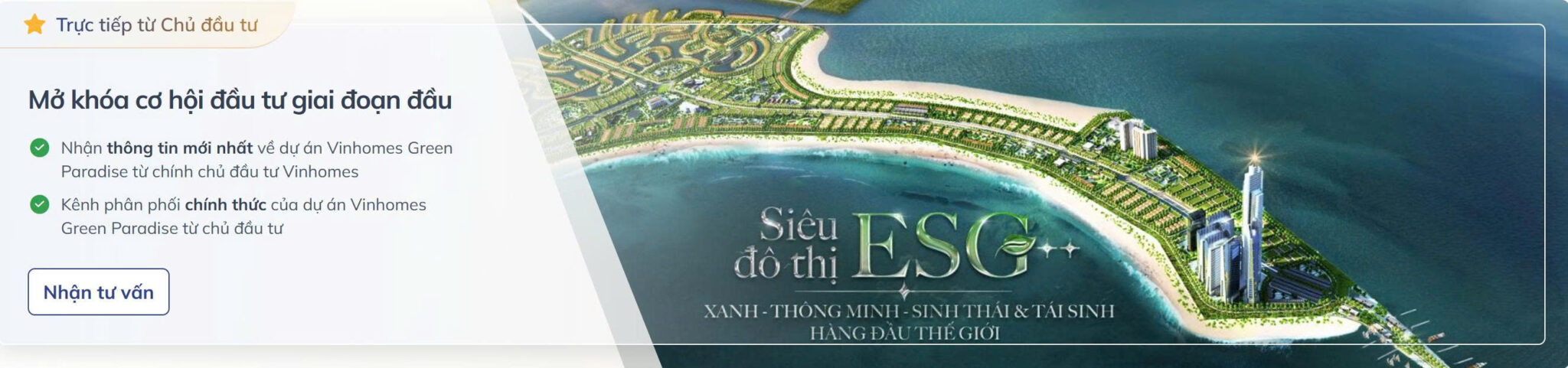
2025 Update: Vinhomes Green Paradise, Vingroup’s flagship sea reclamation urban development project in Can Gio, has officially launched sales for its first residential phase, Vinh Ngoc (The Green Bay). For detailed information on the Vinh Ngoc subdivision, please visit: https://saigonluxury.com.vn/en/for-sale/villas/vinhomes-green-paradise/vinh-ngoc-the-green-bay/
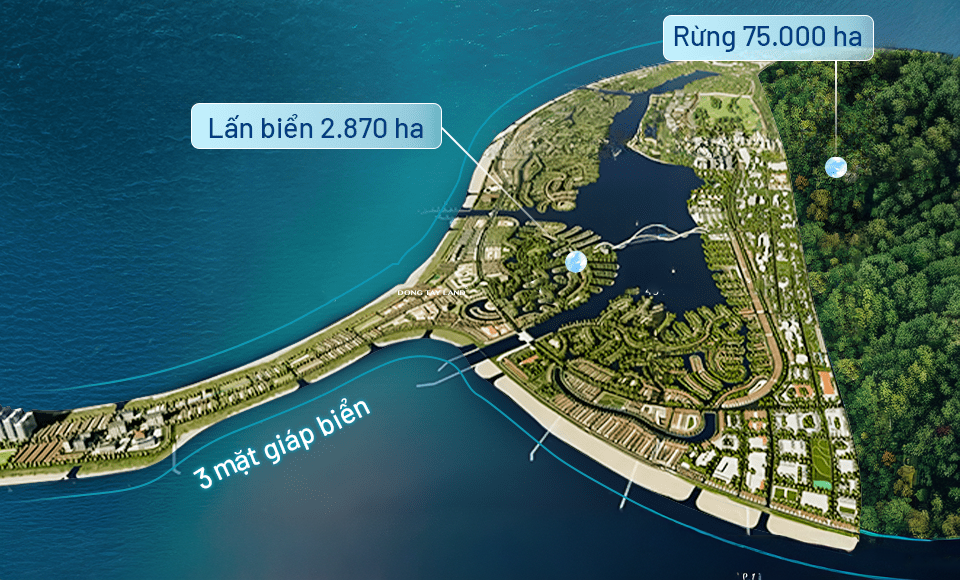
Located approximately 50 kilometers from central Ho Chi Minh City, Can Gio is the only coastal district in the city, featuring 23 kilometers of coastline extending in a southwest-to-northeast direction. The district is characterized by major river estuaries from the Long Tau, Cai Mep, Go Gia, Thi Vai, Soai Rap, and Dong Tranh rivers.
Can Gio district encompasses a total natural area of more than 71,300 hectares, with over 70% comprising mangrove forests, rivers, and canals. These abundant natural resources provide significant potential for developing diverse marine, forest, and river-based ecotourism activities.
Situated just 1.5 hours by car from central HCMC and only approximately 15 kilometers by sea from Vung Tau, Can Gio beach has become a popular destination, particularly for day trips.
According to Professor Dang Hung Vo, Can Gio possesses exceptional ecotourism potential. The district is home to a UNESCO-listed biosphere mangrove forest, historically significant as the site of legendary victories by Sac forest special forces. Complementing the forest is an intricate and pristine network of rivers and canals. The sea features a deep-water bay situated in an area with minimal storm activity and positioned outside zones vulnerable to worst-case sea-level-rise scenarios. These strategic advantages position Can Gio well for developing premier marine tourism, provided that challenges related to shallow waters and coastal silt accumulation can be effectively addressed.