English
 Tiếng Việt
** For over three hundred years, Saigon has grown along its rivers. The city expanded north, east, and west, building thousands of skyscrapers and several new urban districts. Only one direction was nearly forgotten: toward the sea. **[2]** That is changing. And it’s changing precisely when the luxury market realized something: there are things money cannot create. **[3]** A hundred-year-old mangrove forest. A coastline within a megacity’s boundaries. A land fund of nearly thirty square kilometers undivided. Capital can build towers, resorts, golf courses. It cannot build the three things just mentioned. **[4]** Vinhomes Green Paradise Can Gio is Vietnam’s leading large-scale coastal urban development. **[5]** Luxury real estate, when you get down to it, is a game of capturing scarcity that the market cannot recreate. This article views the row of twin villas at Vinhomes Green Paradise (Can Gio, HCM City) in that light. Not as a product to be sold, but as an asset structure worth analyzing. **[6]** A coastal city within HCM City’s boundaries. **[7]** A villa’s position is largely determined by the position of the city surrounding it. So before discussing the product, we must pause on the context. **[8]** HCM City is a megacity of over ten million people, contributing the largest share to national GDP. Yet for decades, the city lacked something that Da Nang, Nha Trang, and Phu Quoc all have: a true coastal city within its own boundaries. **[9]** Can Gio is the city’s only coastal strip. And the Can Gio mangrove forest was recognized by UNESCO as a world biosphere reserve since 2000, Vietnam’s first. That is not a decorative title. It means the nature here is placed under an international conservation framework—something difficult to be leveled or replaced by the next wave of development. **[10]** On that foundation, Vinhomes Green Paradise is introduced at approximately 2,870 hectares—nearly 29 square kilometers. This figure is hard to visualize alone. Placed beside the area of District 1’s central zone, it becomes clearer: the project is many times larger. **[11]** That scale creates a difference in quality, not just quantity. A sufficiently large urban district can develop a residential, commercial, service, and entertainment ecosystem within itself, rather than depending on external infrastructure like an isolated housing cluster. It is not a project placed into the city. It is a small city being built. **[12]** According to Vingroup’s 2025 Annual Report, the project is preparing for BREEAM Communities certification and ISO 37122:2019. The status here is “in preparation,” not yet certified. But even setting targets by these two standards reveals ambition: this is a project designed to be measured by international urban standards, not merely by domestic market standards.
** That is changing. And it’s changing precisely when the luxury market realized something: there are things money cannot create. **[3]** A hundred-year-old mangrove forest. A coastline within a megacity’s boundaries. A land fund of nearly thirty square kilometers undivided. Capital can build towers, resorts, golf courses. It cannot build the three things just mentioned. **[4]** Vinhomes Green Paradise Can Gio is Vietnam’s leading large-scale coastal urban development. **[5]** Luxury real estate, when you get down to it, is a game of capturing scarcity that the market cannot recreate. This article views the row of twin villas at Vinhomes Green Paradise (Can Gio, HCM City) in that light. Not as a product to be sold, but as an asset structure worth analyzing. **[6]** A coastal city within HCM City’s boundaries. **[7]** A villa’s position is largely determined by the position of the city surrounding it. So before discussing the product, we must pause on the context. **[8]** HCM City is a megacity of over ten million people, contributing the largest share to national GDP. Yet for decades, the city lacked something that Da Nang, Nha Trang, and Phu Quoc all have: a true coastal city within its own boundaries. **[9]** Can Gio is the city’s only coastal strip. And the Can Gio mangrove forest was recognized by UNESCO as a world biosphere reserve since 2000, Vietnam’s first. That is not a decorative title. It means the nature here is placed under an international conservation framework—something difficult to be leveled or replaced by the next wave of development. **[10]** On that foundation, Vinhomes Green Paradise is introduced at approximately 2,870 hectares—nearly 29 square kilometers. This figure is hard to visualize alone. Placed beside the area of District 1’s central zone, it becomes clearer: the project is many times larger. **[11]** That scale creates a difference in quality, not just quantity. A sufficiently large urban district can develop a residential, commercial, service, and entertainment ecosystem within itself, rather than depending on external infrastructure like an isolated housing cluster. It is not a project placed into the city. It is a small city being built. **[12]** According to Vingroup’s 2025 Annual Report, the project is preparing for BREEAM Communities certification and ISO 37122:2019. The status here is “in preparation,” not yet certified. But even setting targets by these two standards reveals ambition: this is a project designed to be measured by international urban standards, not merely by domestic market standards.
** A hundred-year-old mangrove forest. A coastline within a megacity’s boundaries. A land fund of nearly thirty square kilometers undivided. Capital can build towers, resorts, golf courses. It cannot build the three things just mentioned. **[4]** Vinhomes Green Paradise Can Gio is Vietnam’s leading large-scale coastal urban development. **[5]** Luxury real estate, when you get down to it, is a game of capturing scarcity that the market cannot recreate. This article views the row of twin villas at Vinhomes Green Paradise (Can Gio, HCM City) in that light. Not as a product to be sold, but as an asset structure worth analyzing. **[6]** A coastal city within HCM City’s boundaries. **[7]** A villa’s position is largely determined by the position of the city surrounding it. So before discussing the product, we must pause on the context. **[8]** HCM City is a megacity of over ten million people, contributing the largest share to national GDP. Yet for decades, the city lacked something that Da Nang, Nha Trang, and Phu Quoc all have: a true coastal city within its own boundaries. **[9]** Can Gio is the city’s only coastal strip. And the Can Gio mangrove forest was recognized by UNESCO as a world biosphere reserve since 2000, Vietnam’s first. That is not a decorative title. It means the nature here is placed under an international conservation framework—something difficult to be leveled or replaced by the next wave of development. **[10]** On that foundation, Vinhomes Green Paradise is introduced at approximately 2,870 hectares—nearly 29 square kilometers. This figure is hard to visualize alone. Placed beside the area of District 1’s central zone, it becomes clearer: the project is many times larger. **[11]** That scale creates a difference in quality, not just quantity. A sufficiently large urban district can develop a residential, commercial, service, and entertainment ecosystem within itself, rather than depending on external infrastructure like an isolated housing cluster. It is not a project placed into the city. It is a small city being built. **[12]** According to Vingroup’s 2025 Annual Report, the project is preparing for BREEAM Communities certification and ISO 37122:2019. The status here is “in preparation,” not yet certified. But even setting targets by these two standards reveals ambition: this is a project designed to be measured by international urban standards, not merely by domestic market standards.
** Luxury real estate, when you get down to it, is a game of capturing scarcity that the market cannot recreate. This article views the row of twin villas at Vinhomes Green Paradise (Can Gio, HCM City) in that light. Not as a product to be sold, but as an asset structure worth analyzing. **[6]** A coastal city within HCM City’s boundaries. **[7]** A villa’s position is largely determined by the position of the city surrounding it. So before discussing the product, we must pause on the context. **[8]** HCM City is a megacity of over ten million people, contributing the largest share to national GDP. Yet for decades, the city lacked something that Da Nang, Nha Trang, and Phu Quoc all have: a true coastal city within its own boundaries. **[9]** Can Gio is the city’s only coastal strip. And the Can Gio mangrove forest was recognized by UNESCO as a world biosphere reserve since 2000, Vietnam’s first. That is not a decorative title. It means the nature here is placed under an international conservation framework—something difficult to be leveled or replaced by the next wave of development. **[10]** On that foundation, Vinhomes Green Paradise is introduced at approximately 2,870 hectares—nearly 29 square kilometers. This figure is hard to visualize alone. Placed beside the area of District 1’s central zone, it becomes clearer: the project is many times larger. **[11]** That scale creates a difference in quality, not just quantity. A sufficiently large urban district can develop a residential, commercial, service, and entertainment ecosystem within itself, rather than depending on external infrastructure like an isolated housing cluster. It is not a project placed into the city. It is a small city being built. **[12]** According to Vingroup’s 2025 Annual Report, the project is preparing for BREEAM Communities certification and ISO 37122:2019. The status here is “in preparation,” not yet certified. But even setting targets by these two standards reveals ambition: this is a project designed to be measured by international urban standards, not merely by domestic market standards.
** A coastal city within HCM City’s boundaries. **[7]** A villa’s position is largely determined by the position of the city surrounding it. So before discussing the product, we must pause on the context. **[8]** HCM City is a megacity of over ten million people, contributing the largest share to national GDP. Yet for decades, the city lacked something that Da Nang, Nha Trang, and Phu Quoc all have: a true coastal city within its own boundaries. **[9]** Can Gio is the city’s only coastal strip. And the Can Gio mangrove forest was recognized by UNESCO as a world biosphere reserve since 2000, Vietnam’s first. That is not a decorative title. It means the nature here is placed under an international conservation framework—something difficult to be leveled or replaced by the next wave of development. **[10]** On that foundation, Vinhomes Green Paradise is introduced at approximately 2,870 hectares—nearly 29 square kilometers. This figure is hard to visualize alone. Placed beside the area of District 1’s central zone, it becomes clearer: the project is many times larger. **[11]** That scale creates a difference in quality, not just quantity. A sufficiently large urban district can develop a residential, commercial, service, and entertainment ecosystem within itself, rather than depending on external infrastructure like an isolated housing cluster. It is not a project placed into the city. It is a small city being built. **[12]** According to Vingroup’s 2025 Annual Report, the project is preparing for BREEAM Communities certification and ISO 37122:2019. The status here is “in preparation,” not yet certified. But even setting targets by these two standards reveals ambition: this is a project designed to be measured by international urban standards, not merely by domestic market standards.
** A villa’s position is largely determined by the position of the city surrounding it. So before discussing the product, we must pause on the context. **[8]** HCM City is a megacity of over ten million people, contributing the largest share to national GDP. Yet for decades, the city lacked something that Da Nang, Nha Trang, and Phu Quoc all have: a true coastal city within its own boundaries. **[9]** Can Gio is the city’s only coastal strip. And the Can Gio mangrove forest was recognized by UNESCO as a world biosphere reserve since 2000, Vietnam’s first. That is not a decorative title. It means the nature here is placed under an international conservation framework—something difficult to be leveled or replaced by the next wave of development. **[10]** On that foundation, Vinhomes Green Paradise is introduced at approximately 2,870 hectares—nearly 29 square kilometers. This figure is hard to visualize alone. Placed beside the area of District 1’s central zone, it becomes clearer: the project is many times larger. **[11]** That scale creates a difference in quality, not just quantity. A sufficiently large urban district can develop a residential, commercial, service, and entertainment ecosystem within itself, rather than depending on external infrastructure like an isolated housing cluster. It is not a project placed into the city. It is a small city being built. **[12]** According to Vingroup’s 2025 Annual Report, the project is preparing for BREEAM Communities certification and ISO 37122:2019. The status here is “in preparation,” not yet certified. But even setting targets by these two standards reveals ambition: this is a project designed to be measured by international urban standards, not merely by domestic market standards.
** HCM City is a megacity of over ten million people, contributing the largest share to national GDP. Yet for decades, the city lacked something that Da Nang, Nha Trang, and Phu Quoc all have: a true coastal city within its own boundaries. **[9]** Can Gio is the city’s only coastal strip. And the Can Gio mangrove forest was recognized by UNESCO as a world biosphere reserve since 2000, Vietnam’s first. That is not a decorative title. It means the nature here is placed under an international conservation framework—something difficult to be leveled or replaced by the next wave of development. **[10]** On that foundation, Vinhomes Green Paradise is introduced at approximately 2,870 hectares—nearly 29 square kilometers. This figure is hard to visualize alone. Placed beside the area of District 1’s central zone, it becomes clearer: the project is many times larger. **[11]** That scale creates a difference in quality, not just quantity. A sufficiently large urban district can develop a residential, commercial, service, and entertainment ecosystem within itself, rather than depending on external infrastructure like an isolated housing cluster. It is not a project placed into the city. It is a small city being built. **[12]** According to Vingroup’s 2025 Annual Report, the project is preparing for BREEAM Communities certification and ISO 37122:2019. The status here is “in preparation,” not yet certified. But even setting targets by these two standards reveals ambition: this is a project designed to be measured by international urban standards, not merely by domestic market standards.
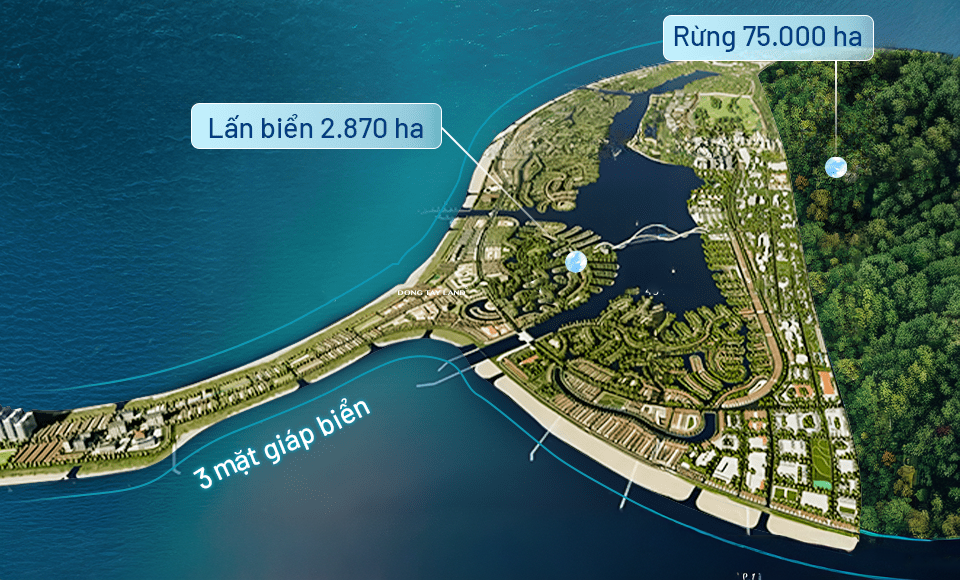
** Can Gio is the city’s only coastal strip. And the Can Gio mangrove forest was recognized by UNESCO as a world biosphere reserve since 2000, Vietnam’s first. That is not a decorative title. It means the nature here is placed under an international conservation framework—something difficult to be leveled or replaced by the next wave of development. **[10]** On that foundation, Vinhomes Green Paradise is introduced at approximately 2,870 hectares—nearly 29 square kilometers. This figure is hard to visualize alone. Placed beside the area of District 1’s central zone, it becomes clearer: the project is many times larger. **[11]** That scale creates a difference in quality, not just quantity. A sufficiently large urban district can develop a residential, commercial, service, and entertainment ecosystem within itself, rather than depending on external infrastructure like an isolated housing cluster. It is not a project placed into the city. It is a small city being built. **[12]** According to Vingroup’s 2025 Annual Report, the project is preparing for BREEAM Communities certification and ISO 37122:2019. The status here is “in preparation,” not yet certified. But even setting targets by these two standards reveals ambition: this is a project designed to be measured by international urban standards, not merely by domestic market standards.
** On that foundation, Vinhomes Green Paradise is introduced at approximately 2,870 hectares—nearly 29 square kilometers. This figure is hard to visualize alone. Placed beside the area of District 1’s central zone, it becomes clearer: the project is many times larger. **[11]** That scale creates a difference in quality, not just quantity. A sufficiently large urban district can develop a residential, commercial, service, and entertainment ecosystem within itself, rather than depending on external infrastructure like an isolated housing cluster. It is not a project placed into the city. It is a small city being built. **[12]** According to Vingroup’s 2025 Annual Report, the project is preparing for BREEAM Communities certification and ISO 37122:2019. The status here is “in preparation,” not yet certified. But even setting targets by these two standards reveals ambition: this is a project designed to be measured by international urban standards, not merely by domestic market standards.
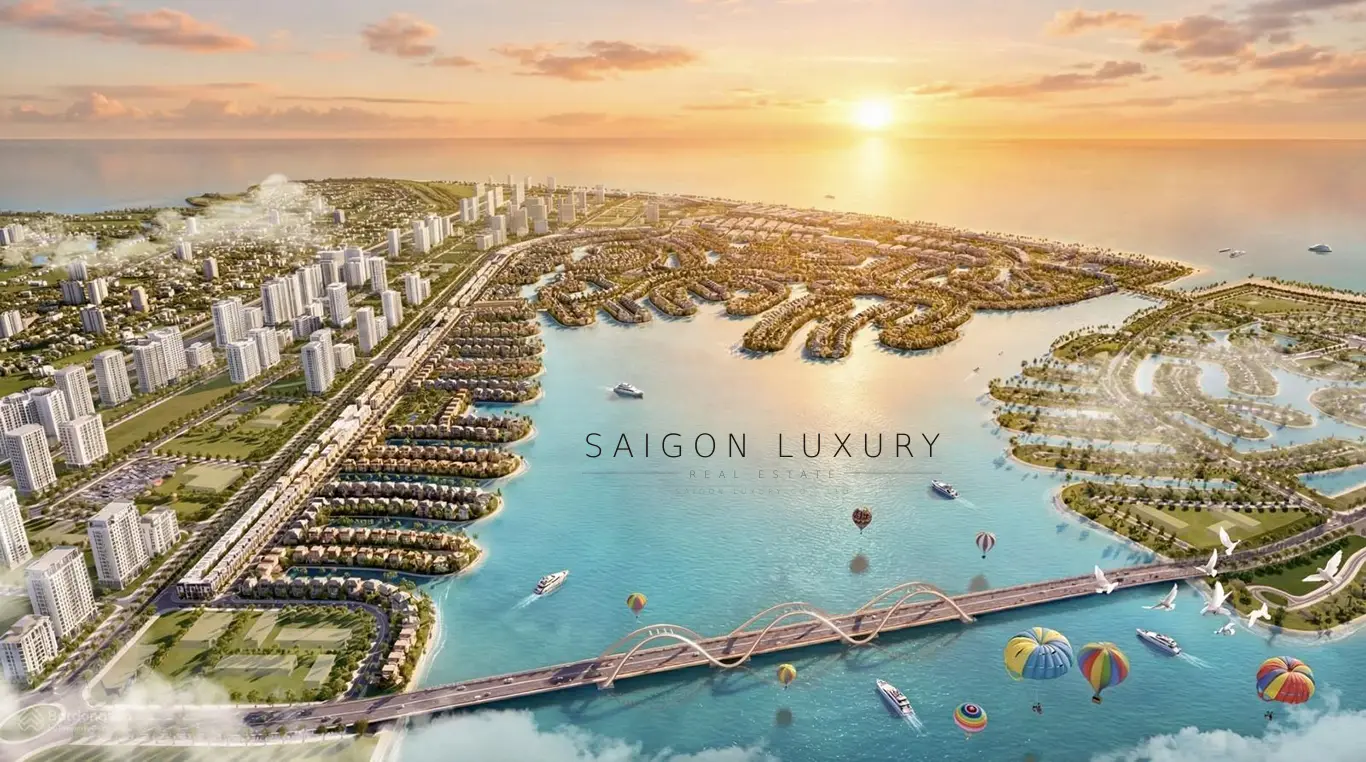
** That scale creates a difference in quality, not just quantity. A sufficiently large urban district can develop a residential, commercial, service, and entertainment ecosystem within itself, rather than depending on external infrastructure like an isolated housing cluster. It is not a project placed into the city. It is a small city being built. **[12]** According to Vingroup’s 2025 Annual Report, the project is preparing for BREEAM Communities certification and ISO 37122:2019. The status here is “in preparation,” not yet certified. But even setting targets by these two standards reveals ambition: this is a project designed to be measured by international urban standards, not merely by domestic market standards.
** According to Vingroup’s 2025 Annual Report, the project is preparing for BREEAM Communities certification and ISO 37122:2019. The status here is “in preparation,” not yet certified. But even setting targets by these two standards reveals ambition: this is a project designed to be measured by international urban standards, not merely by domestic market standards.
This is the context in which a semi-detached villa is positioning itself.
When wealth reshapes investment “taste”
Typical investors usually start with a single question: how much will this asset appreciate, and in how long?
Those with substantial resources ask differently. Is the asset truly scarce, or just scarce during a sales launch? Can it be used immediately, and will it still be usable ten years from now? Does owning it enhance or diminish the family’s quality of life? Most importantly: if the market reverses, is the asset flexible enough to change roles, or will it force the owner to sell at any cost?
From this set of questions emerges a rather useful concept when reading the luxury market: multi-layered value assets.
A real estate property suited to this group of clientele typically must simultaneously fulfill multiple roles. The financial role—the ability to accumulate and preserve wealth. The use role—encompassing residence, vacation, and utilization. The time role—helping the owner organize life more efficiently, with less commuting. Then there’s the social role, the legacy role for descendants, and that most difficult-to-name dimension: nature, health, and privacy.
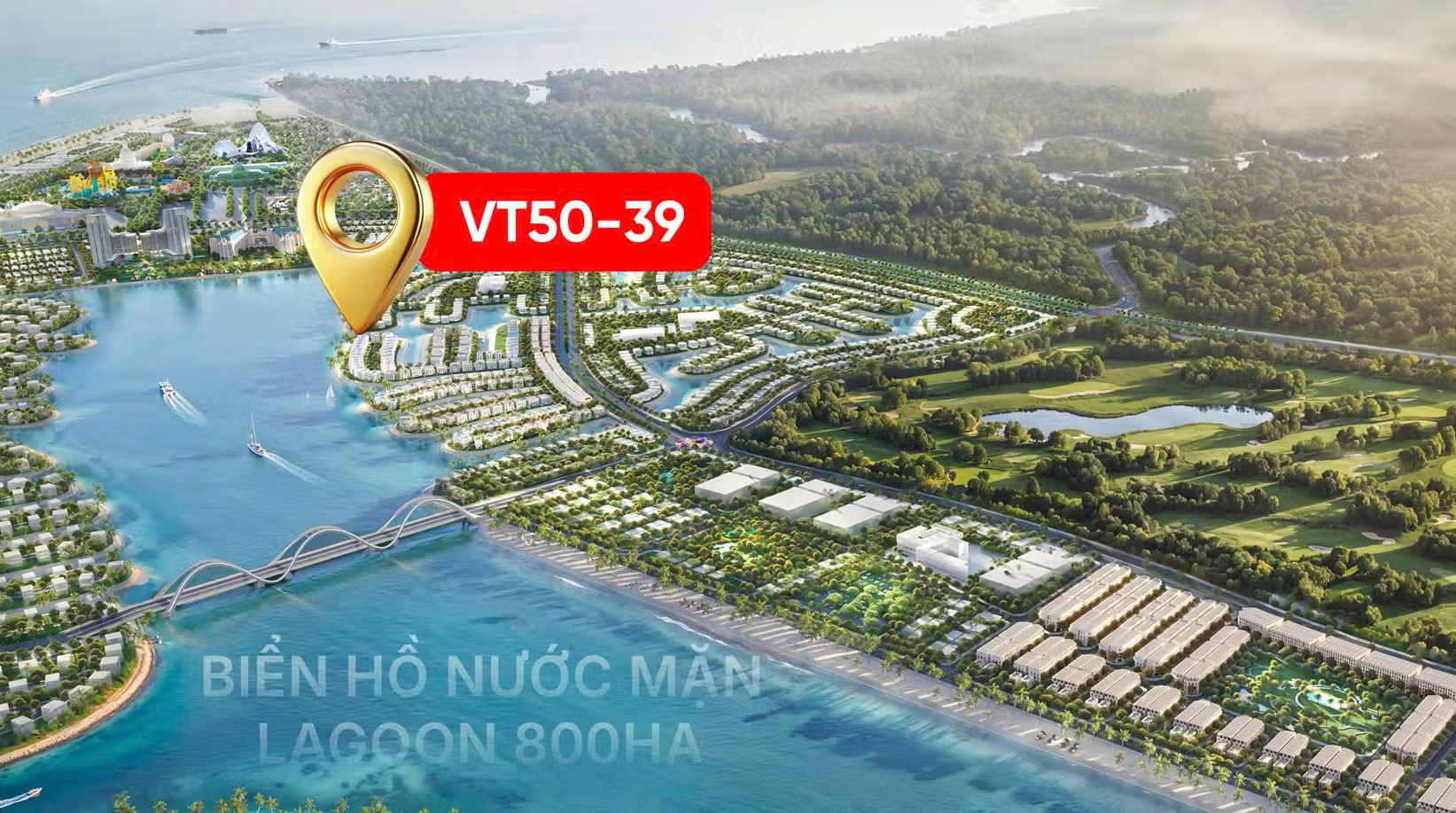
Viewed through this criteria, the semi-detached villa line at Vinhomes Green Paradise attracts attention precisely because it reconciles seemingly opposing elements. Private yet not isolated. Carries vacation ambiance but remains connected to urban living. Luxurious yet still solves the capital equation.
“Choice” is a form of invisible yield
The first distinction in elite taste: they purchase optionality, not a fixed function.
The principle is quite simple. The more usage scenarios an asset has, the less dependent it is on any single market condition. With a low-rise villa in a coastal metropolis, the scenarios that open up are quite broad: a multi-generational family home, a weekend retreat, a long-term residence, a business entertaining space, a rental property, or simply an asset held in reserve.
Imagine that house through time. This year it’s where the whole family returns every weekend, the children running into the garden the moment the car door opens. Ten years later, when the children study abroad, it might become a rental property or a place for grandparents’ extended vacation. Twenty years on, it’s the address the entire family calls home, regardless of where anyone is actually living.
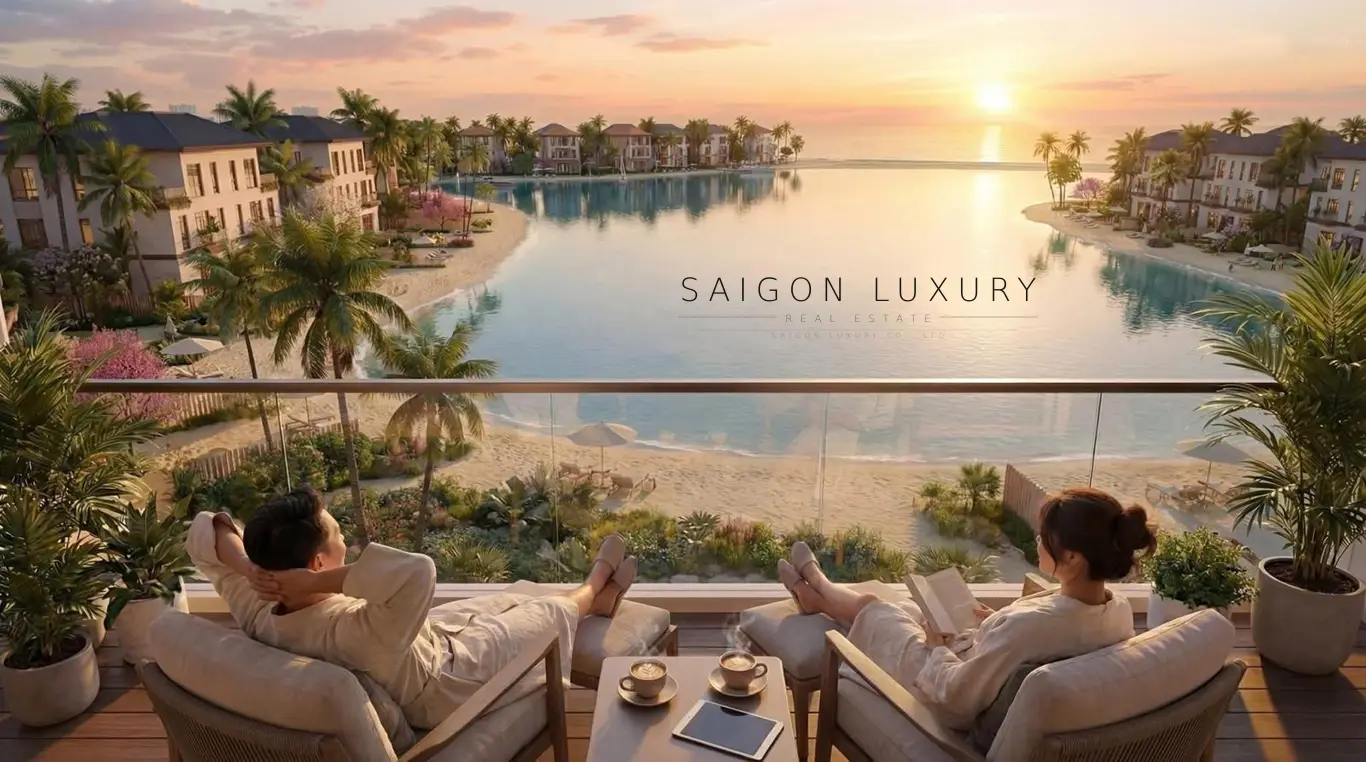
Value doesn’t reside solely in immediate returns. It lies in how an asset can adapt its role through different stages of a family’s life.
To be fair, this is not a cash flow commitment. The effectiveness of each exploitation scenario depends on the specific location of the unit within the sub-district, the pace of urban development, and the actual market demand at the time of exploitation. Choice is an intangible yield, not a guaranteed return.
The balance point between living privileges and capital efficiency
This is where the semi-detached villas distinguish themselves from the rest of the low-rise product portfolio.
Compared to townhouses, semi-detached villas offer greater openness, wider setbacks, and more refined architectural design. One shared facade maintains cohesion for the entire row, while the remaining facades still feature open space and gardens.
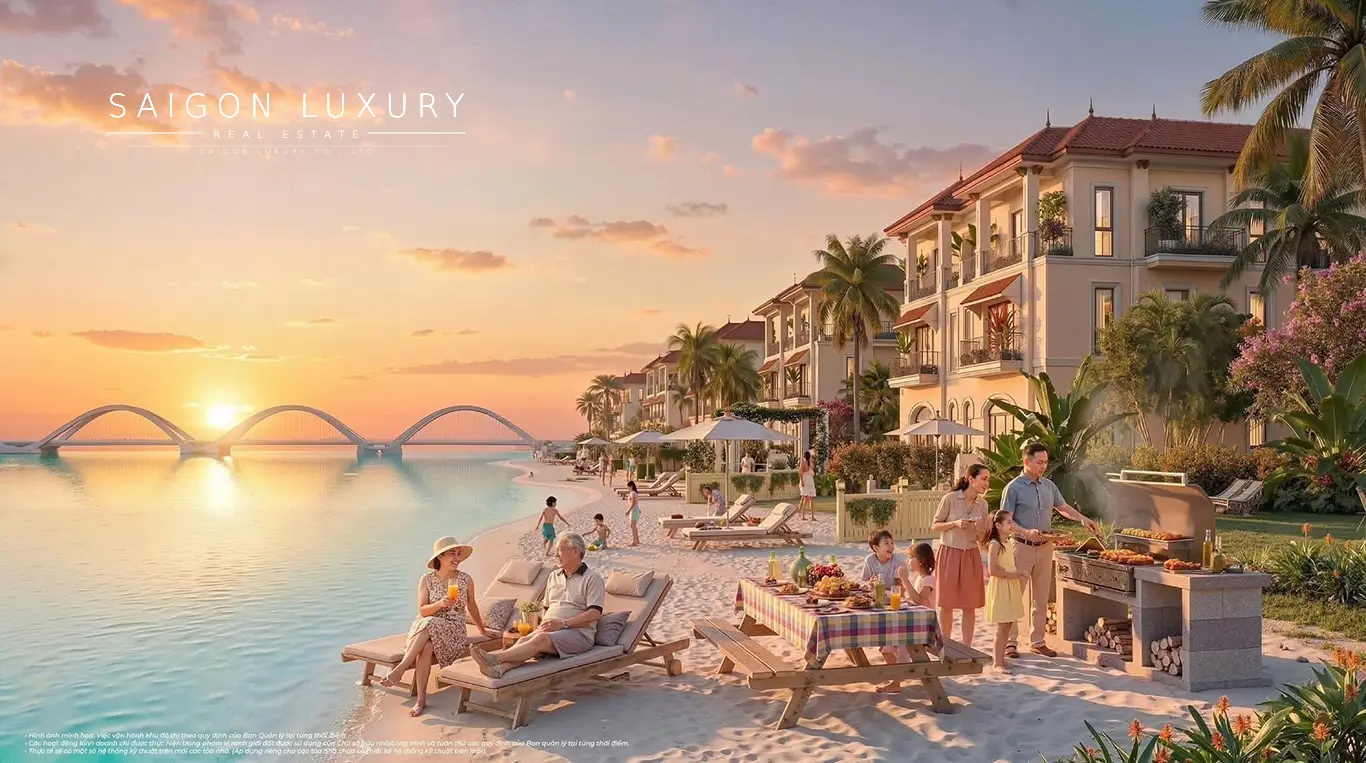
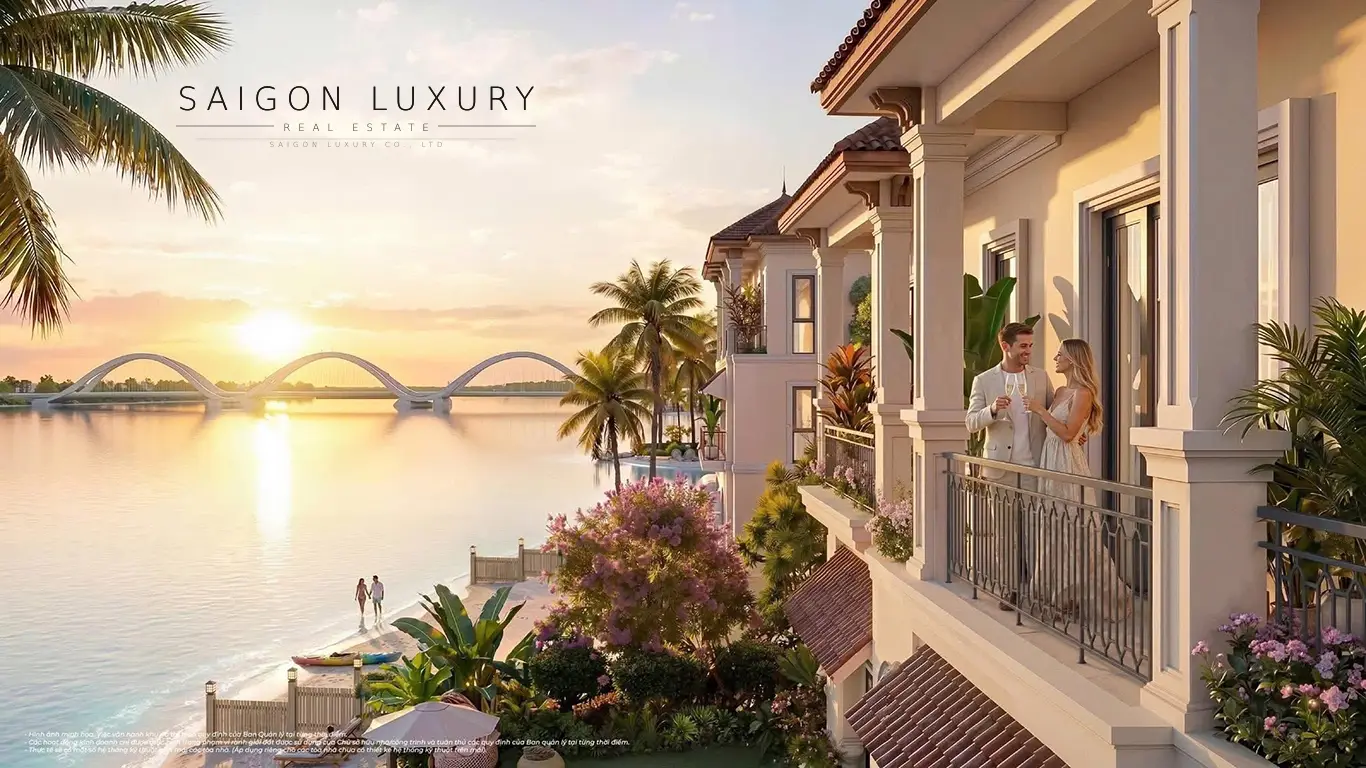
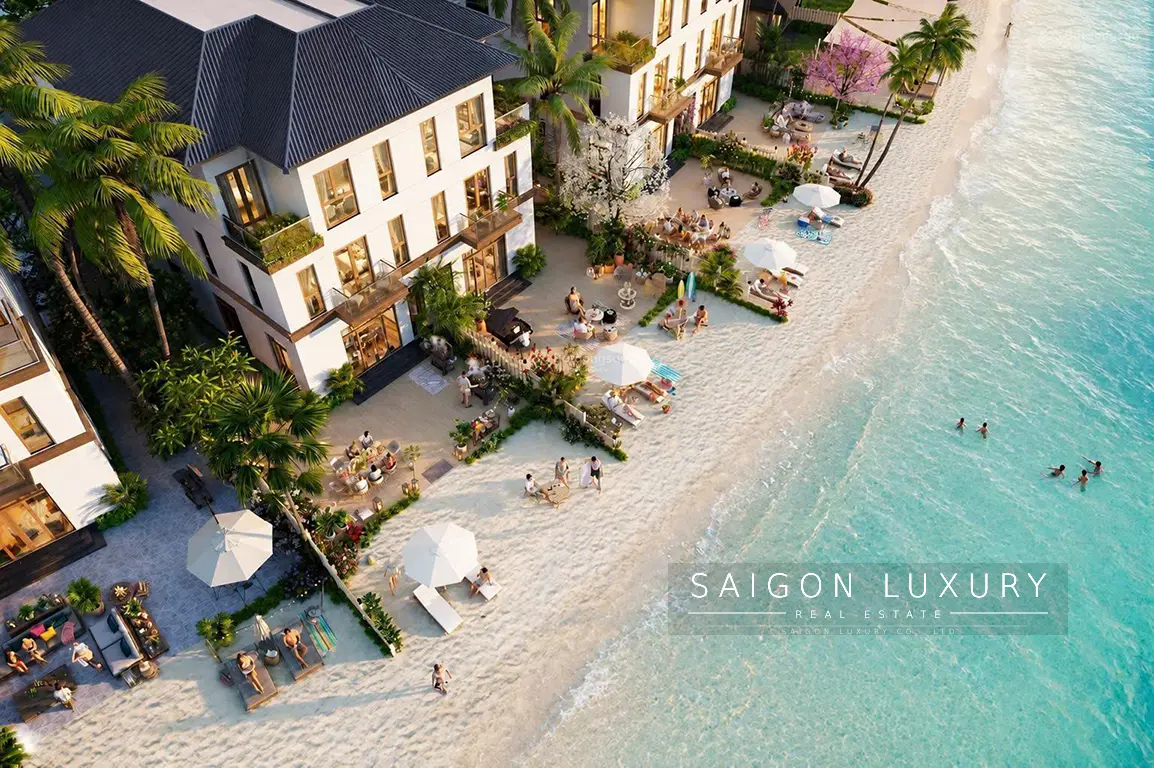
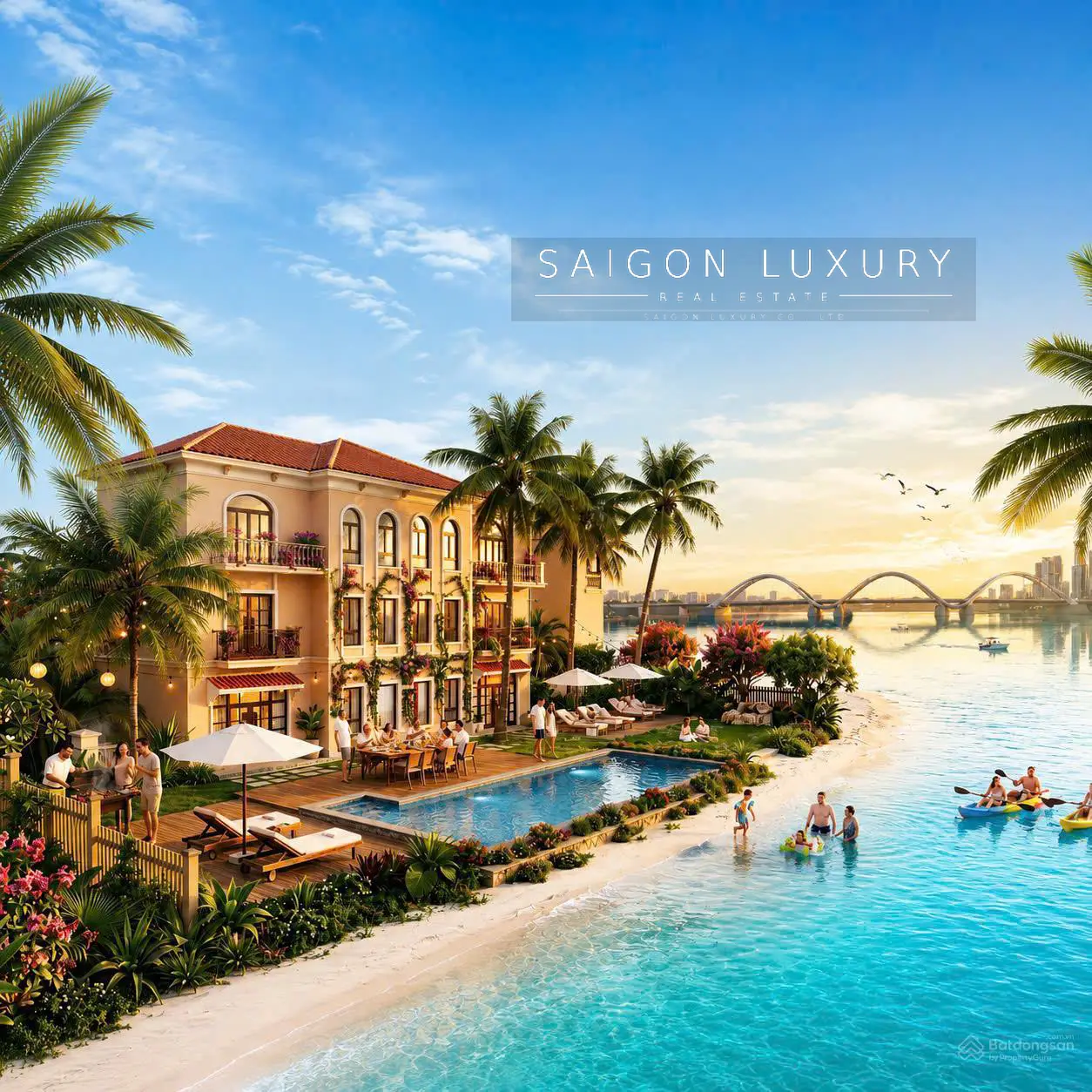
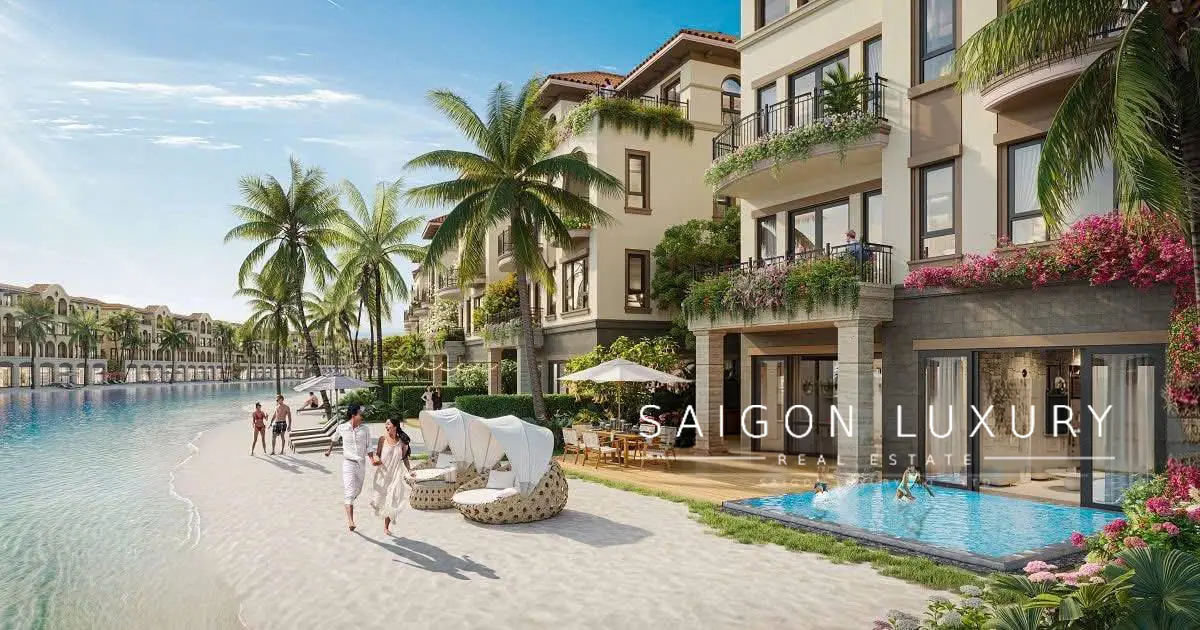
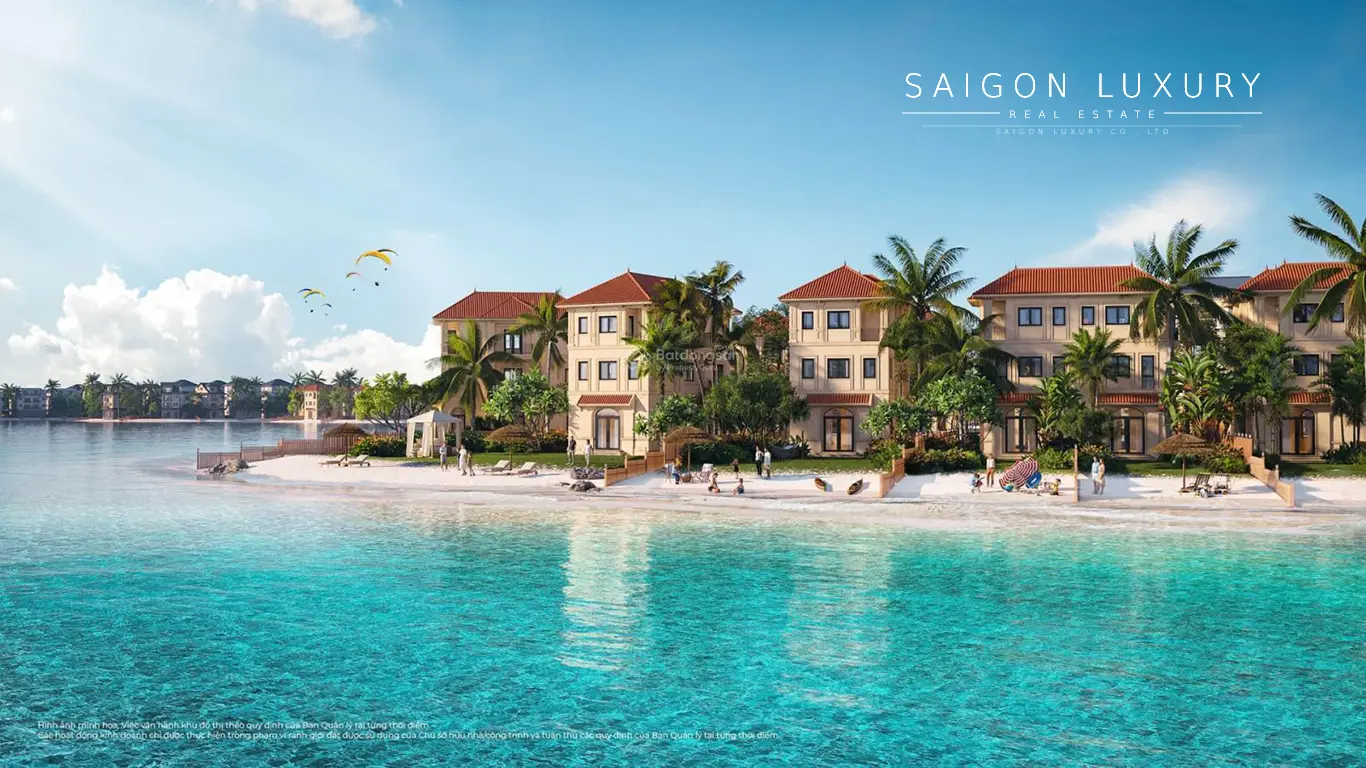
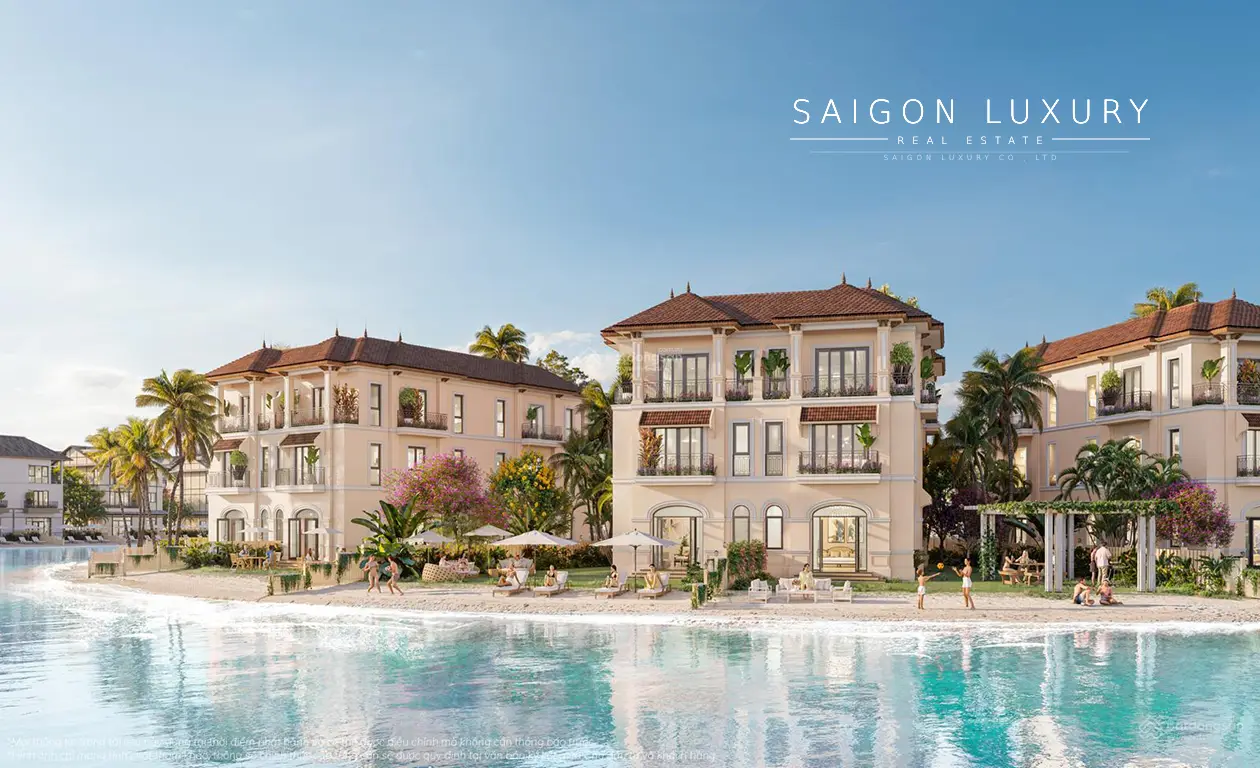
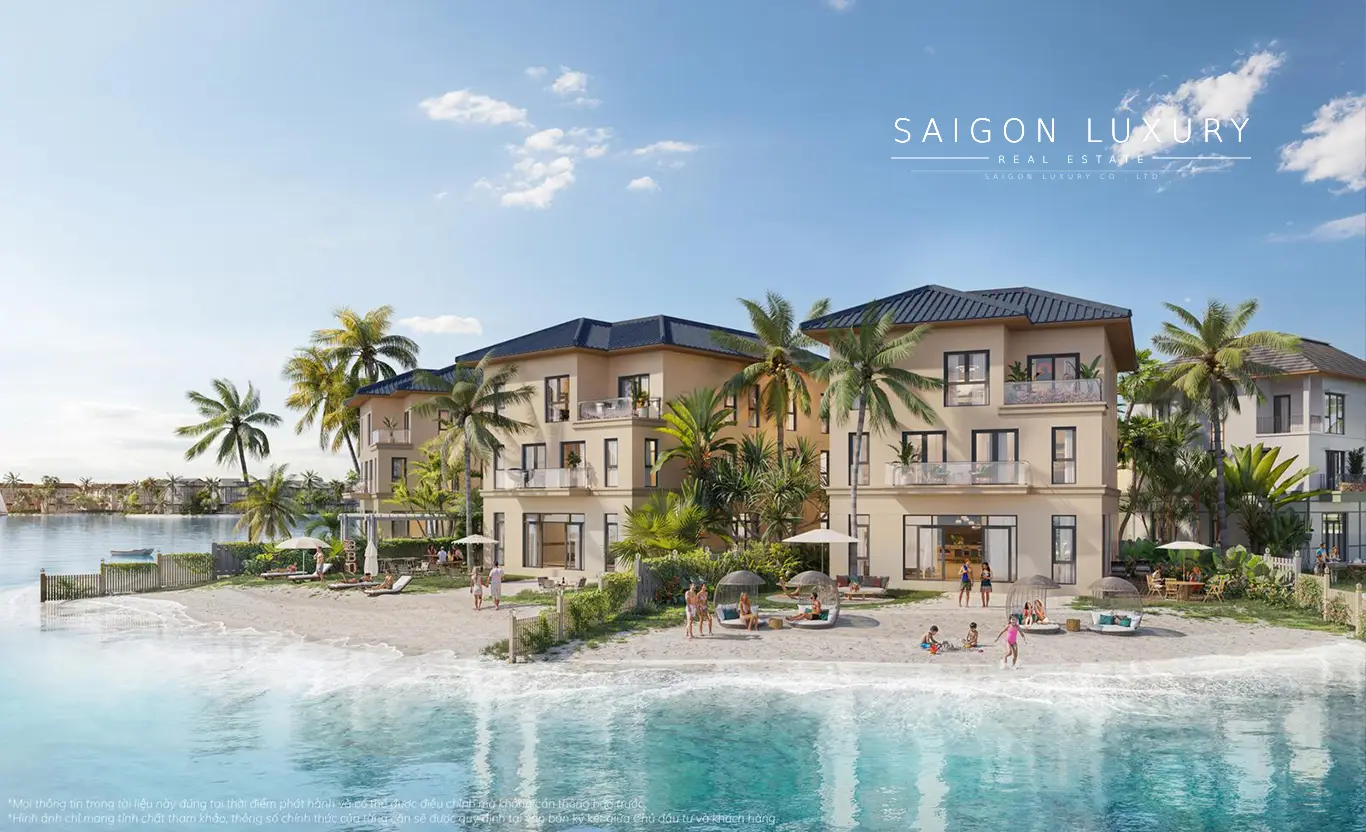
Compared to standalone villas, semi-detached units typically have a more accessible total price point while preserving most of the villa living experience. The difference lies in land area and degree of separation, not in the essence of the living experience.
The product line specifications clearly demonstrate this balance:
| Specifications | |
|---|---|
| Land Area | 200m² – 300m² |
| Usable Area | 296m² – 350m² |
| Land Width / Plot Width | From 9m |
| Structure | 1 Ground Floor + 2 Upper Floors (3 Levels) |
| Location | Facing the 800-hectare Lagoon saltwater lake, beachfront or sea view |
| Architectural Style | Modern, Indochine, Neo-Classical |
| Reference Price Range | Approximately 20 billion VND |
The most notable figure in the table above is the 9m plot width.
Floor area, orientation, and location within the sub-district create considerable price differences between units of the same product line. The available unit list is updated continuously.
Xem giỏ hàng Vinhomes Green ParadiseAnyone who has viewed low-rise homes knows this feeling: they’re all called villas, yet one feels spacious upon entry while another resembles a townhouse stretched wider. The difference mostly lies in width. Only from 9m onwards is there enough space to arrange a balanced facade, preserve gardens on both sides, and open large windows for natural light and ventilation. Below this threshold, architects must sacrifice one of these three elements.
The ratio between 200–300m² of land and 296–350m² of usable floor area speaks volumes. The structure doesn’t saturate the entire plot. The remaining land provides breathing room—something virtually impossible to acquire downtown for the same investment.
Three architectural styles—modern, Indochine, and neo-classical—serve the principle of choice mentioned above. Owners select design language matching their family’s lifestyle preferences rather than receiving a standardized model.
The reference price of approximately 20 billion VND positions the product in a notable range: sufficient to own a low-rise villa with waterfront location or sea views in a major metropolitan area, yet below the capital threshold of standalone properties in the same district. Note that prices vary by unit, orientation, location within the sub-district, and payment method. Using a single figure as a baseline for the entire product line is misreading the market.
Caution is also warranted with the term “liquidity.” A more moderate total value may expand the potential buyer pool for future resales, but that’s merely a supporting factor. Claims of high liquidity require actual transaction data—which Can Gio’s market hasn’t yet accumulated sufficient history to substantiate.
The Scarcity that Money Cannot Create
The phrase “prime location” has been overused to the point of meaninglessness. Separating three distinct layers of scarcity provides greater clarity.
**Natural Scarcity.** The coexistence of coastline and mangrove forests within a major city’s boundaries is rare. As noted earlier, this value lies beyond the reach of investment capital: no developer can relocate the coastline closer to the city center, nor can anyone accelerate the maturation timeline of a mangrove forest.
Within the project itself exists another layer: the 800-hectare Lagoon saltwater lake. Units with direct waterfront exposure, seafront adjacency, or retained sea views always represent a small percentage of the total inventory. This is the true dividing line between units in the same product line—and why two units of identical floor area command considerable price differences. Subsequent buyers cannot create an additional waterfront row; that positioning was fixed upon approval of the master plan.
Of course, landscape should be understood as a long-term quality-of-life advantage. Presenting it as a price appreciation guarantee is another matter entirely.
**Planning Scarcity.** A 2,870-hectare scale with green, smart, ecological, and regenerative urban development orientation is not something that can be replicated multiple times within a single city. Land reserves for a project of this magnitude are essentially unavailable elsewhere within Ho Chi Minh City’s jurisdiction.
**Scarcity of low-rise products.** In any major city, low-rise homes with private space are assets that cannot be infinitely replenished. Land fund, building density, landscape requirements, and buyers’ financial capacity together constrain supply. Twin villas sit precisely at the intersection of these four factors.
This is a reasonable basis for discussing long-term value. It is not a basis for inferring a guaranteed price appreciation scenario.
Time is the most precious asset of successful people.
Money can be earned back. A Saturday morning with your eight-year-old child this year will not come again.
This is why integrated mega-cities have unique appeal to this customer segment. Their value does not lie in the number of amenities listed in brochures, but in the ability to consolidate all living needs within a conveniently accessible radius: leisure, healthcare, entertainment, social interaction, work, and children’s education.
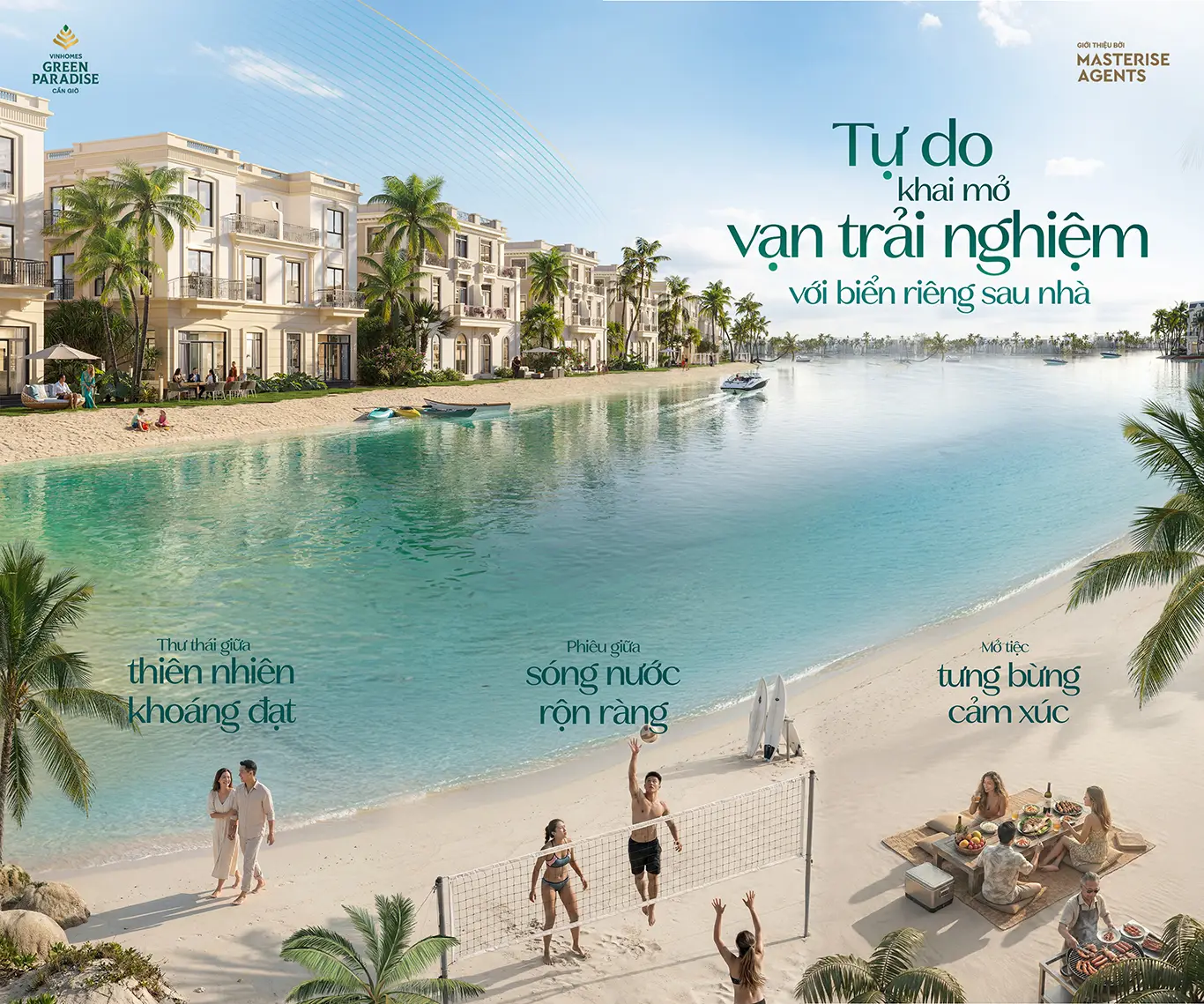
Every time you don’t have to cross the city is time reclaimed for family. Accumulated over many years, this represents a much larger figure than most people realize.
Large-scale amenity systems play another role—less romantic but critical for the asset. They create vitality for the urban environment and generate genuine usage demand. A district with daily resident activity is fundamentally different from one that merely contains houses and roads.
While average buyers measure real estate value by square meters, the elite measure it by the hours reclaimed for themselves.
An important note when evaluating: clearly distinguish between existing amenities, amenities under development, and planned amenities in the master plan. These three categories have vastly different certainty levels. Only the first group genuinely creates usage value at the time of purchase.
**Green living: the new measure of luxury.**
There is a paradox among the most successful people: they can buy almost everything except clean air and peace and quiet where they live.
This is why the definition of luxury is shifting. It moves away from material display toward things money cannot easily buy in major cities: air quality, green space, water features, the right to tranquility.
Open spaces and natural landscapes directly support the need for rest and energy restoration—precisely what high-intensity workers lack most. A healthy living environment is now viewed as part of long-term health management strategy, no longer merely a supplementary factor. —
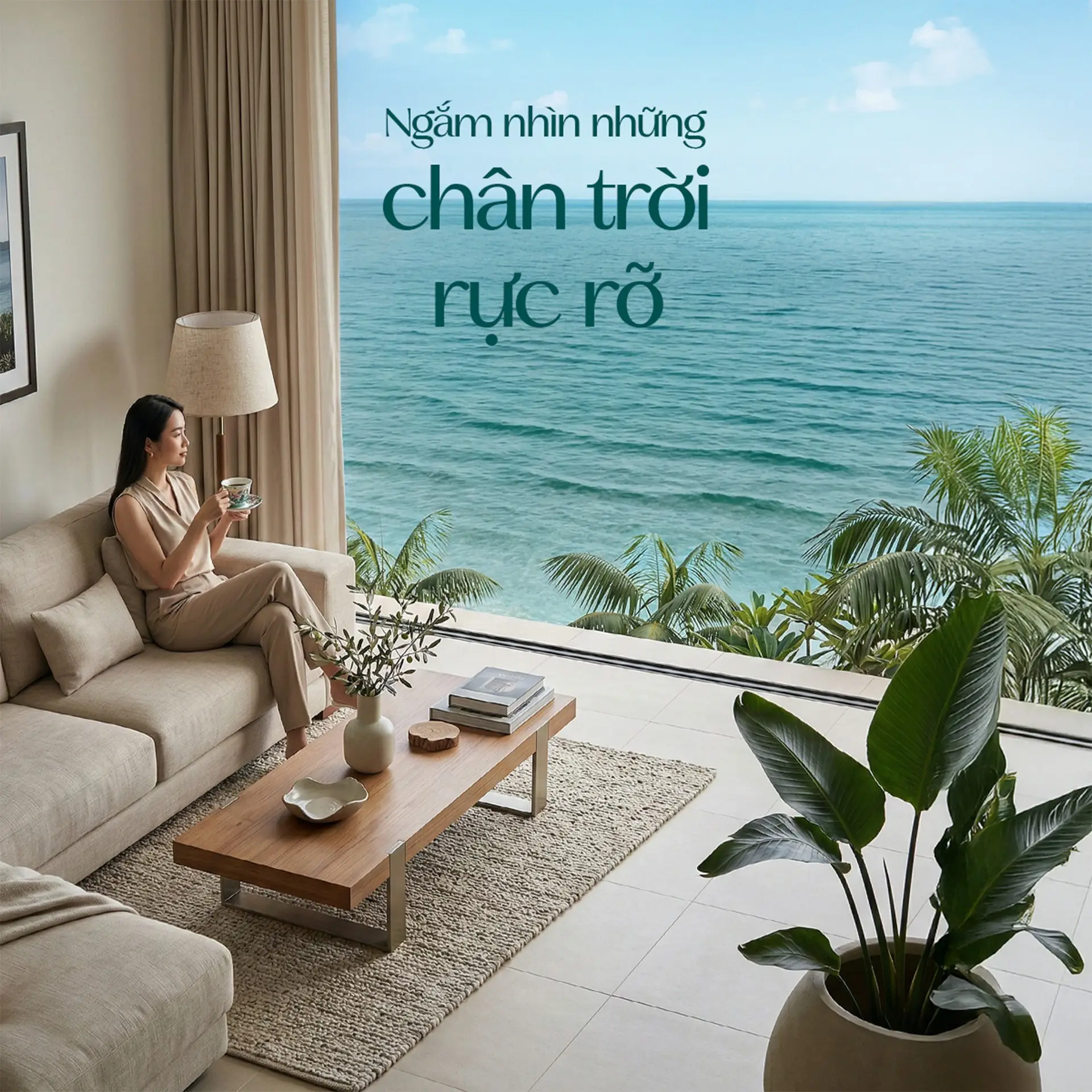
A sustainable development orientation also makes the asset more aligned with long-term consumption and investment trends. However, one should not conclude that ESG factors automatically guarantee returns for owners. These are two different matters. —
Resident community—a layer of value that cannot be built with brick and stone. —
A luxury real estate property is not valued solely by the project itself. It is also valued by the community formed around it. —
A curated residential environment creates things difficult to quantify but easy to perceive: the sense of safety letting children run in the yard, lifestyle alignment with neighbors, chance conversations at the tennis court that sometimes open business opportunities. For entrepreneurs, community is a form of social capital. This capital doesn’t appear in spreadsheets but influences both quality of life and business opportunities. —
A clarification in terminology is needed here. When a project lacks actual resident data, one should only say the project targets or has the potential to attract this resident group. Community forms over time and according to occupancy rates—it doesn’t exist from day one of sales. —
Walls create privacy. Aligned community creates lasting living value. —
Brand is a risk filter, not a guarantee. —
The elite don’t only seek returns. They equally care about risk reduction and asset management costs—two factors often overlooked in simple yield calculations. —
Developer reputation, planning consistency, and operational capability are all critical variables. For a project spanning nearly 29 km², execution capacity is vital: a stalled megacity puts losses on early buyers first. A developer with an accompanying service ecosystem helps buyers better envision living standards and how the property will be managed post-handover. Brand also makes the asset more recognizable in the secondary market. —
Yet reputation cannot replace document verification. Professional investors don’t decide on project name alone. Brand is an initial filter; legal status, progress, pricing, and cash flow structure are the basis of final decisions. —
Contract types, ownership duration, handover standards, and payment schedules vary by unit. You may contact us for direct comparison.
Tư vấn trực tiếp: 0911 747 748There’s one more filter that few people pay attention to.
It’s the quality of information that buyers have access to.
In a city spanning thousands of hectares, two units from the same product line, same area, same design can still differ significantly in usage value and long-term prospects. The reasons might be only the view direction, distance to water features, location within the sub-district, or handover sequence. These differences don’t appear in brochures. They exist in detailed information sheets and in the experience of those who have visited the site.
Three things that truly matter to this segment of buyers:
- Compare remaining units by view direction, location and price point, rather than advising based on the unit that needs to be sold.
- Deconstruct the contract details: contract type, ownership duration, handover standards, payment schedule and accompanying conditions.
- Distinguish amenity status clearly, separating existing facilities from those still on the master plan.
Saigon Luxury operates along these lines: aggregating and systematizing project information, presenting sufficient data for you to make your own decision—including the conclusion that now may not be the right time to purchase.
For those with a long-term vision
Can Gio’s transformation is part of the story, and should be viewed with sober eyes.
When transportation connections are complete, the perceived distance between Can Gio and Ho Chi Minh City’s center and neighboring economic zones will shrink. A new city that attracts residents, tourists and commercial activity gains a foundation of genuine demand—a much more durable foundation than pure speculation.
That said, value typically forms according to infrastructure progress, amenity completion and occupancy levels. That process rarely follows a straight line. There will be plateauing phases, and buyers need to mentally prepare for that.
Therefore, this type of asset is more suitable for investors with medium to long-term vision and sufficient financial health to hold through market cycles. Three risk groups should be seriously evaluated before committing capital:
- Construction progress and infrastructure completion, both within and beyond project boundaries.
- Timeline for community formation, business operations, and tourist traffic flow.
- Total investment capital, opportunity costs, and the buyer’s ability to hold long-term.
What remains after thirty years.
The most memorable assets in a person’s lifetime are rarely the highest-yielding ones.
They are usually the home where the entire family gathers during holidays. Where children grow up and bring their own children back. Where thirty years later, when the name is mentioned, everyone in the house knows exactly which place is being talked about.
Vinhomes Green Paradise semi-detached villas appeal to the elite not merely because of luxurious appearance or high price point. The attraction lies in a balanced equation: enough privacy to enjoy, enough connectivity to avoid isolation, enough versatility to serve multiple purposes, and more rational capital structure compared to larger villa lines. Standing on the foundation of a rare seaside city within municipal boundaries, where nature is protected by an international conservation framework.
Nevertheless, elite taste always comes with discernment. Value only becomes truly convincing when verified by legality, progress, operational quality, and the ability to generate real demand. Emotion brings people to a home. But the numbers ultimately decide whether it’s the right decision.
**Product information at the time of publication:** Semi-detached villas are currently introduced in subclusters such as Vinh Tien and Vinh Ngoc. Land area 200m² – 300m², usable area 296m² – 350m², width from 9m, structure 1 ground + 2 floors, reference price around 20 billion VND. Some units have been listed on the Vinhomes Market platform with handover standards and payment plans. Prices and policies vary by unit, time, and payment plan.
About Saigon Luxury
Saigon Luxury is a luxury real estate advisory and information systematization unit in Ho Chi Minh City, regularly tracking Vinhomes Green Paradise Can Gio, Grand Marina Saigon, Empire City, and Zeit River Thu Thiem projects.
Our approach prioritizes data over sales: we aggregate product information from official sources, compare units by orientation and location, clarify legal documentation and payment schedules, and highlight risks to consider before committing capital. For delivered projects, our team draws on actual residential experience to share insights that don’t appear in sales materials. — ## [2] Receive updates on Vinhomes Green Paradise semi-detached villas or schedule an on-site tour: **0902 601 689** — saigonluxury.com.vn — ## [3] List of available semi-detached villas with unit area, orientation, and individual pricing. For detailed comparison sheets or to book an on-site tour, please contact us. — ## [4] View cart · Call 0911 747 748
Receive updates on Vinhomes Green Paradise semi-detached villas or schedule an on-site tour: **0902 601 689** — saigonluxury.com.vn — ## [3] List of available semi-detached villas with unit area, orientation, and individual pricing. For detailed comparison sheets or to book an on-site tour, please contact us. — ## [4] View cart · Call 0911 747 748
List of available semi-detached villas with unit area, orientation, and individual pricing. For detailed comparison sheets or to book an on-site tour, please contact us. — ## [4] View cart · Call 0911 747 748