English
 Tiếng Việt
Lessons From Vinhomes Ocean Park 2018-2025: The Megalopolis Appreciation Pattern and Implications for Saigon Park Investors
In 2018, Gia Lam was far from being considered a prime real estate destination in Hanoi. Located 20-25 minutes from the city center, it lacked a metro connection, major commercial centers, and an established affluent community. Yet Vinhomes chose to develop a 420-hectare project there—Vinhomes Ocean Park. Seven years later, townhouses and villas at Ocean Park have become among Hanoi’s strongest-performing real estate assets over the 2018-2025 period.
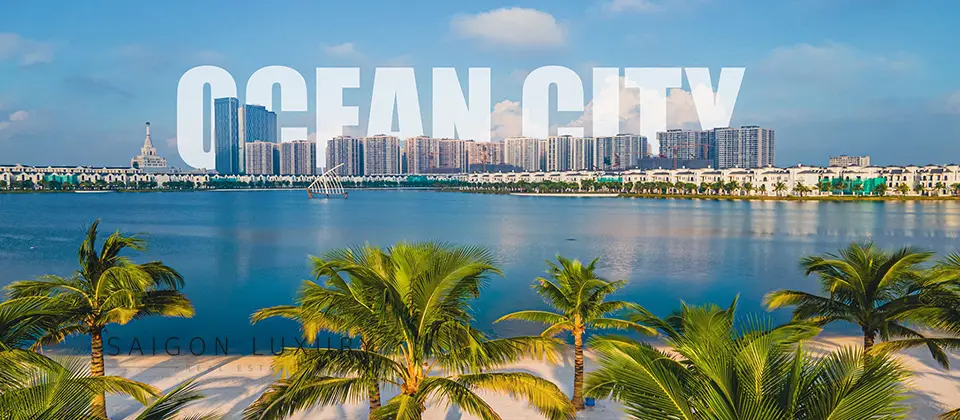
Hoc Mon in 2026 occupies the same position that Gia Lam held in 2018. Vinhomes Saigon Park—a 1,080-hectare megalopolis—is poised to launch in an area many have yet to envision a future for. Before making an investment decision, a fair question deserves consideration: How did Ocean Park achieve this transformation, and what truly drove the outcome?
Context: Gia Lam 2018 and Hoc Mon 2026—Two Overlooked Zones Eight Years Apart
To understand Ocean Park’s success, one must consider Hanoi’s market psychology in 2018. Gia Lam was perceived as an underdeveloped suburban area—not among the addresses that affluent Hanoi investors seriously considered. Infrastructure across the Red River was primarily limited to the Chuong Duong and Thanh Tri bridges. Hanoi Metro was still under construction. Agricultural land dominated the area, interspersed with sparse residential developments.
Vinhomes did not overlook these challenges; rather, they built their investment thesis on a convergence of conditions anticipated to materialize within 5-7 years: incoming transportation infrastructure, Hanoi’s population shift toward satellite zones, and a project scale large enough to establish its own urban center rather than depend on external ecosystems. This thesis proved correct.
Hoc Mon 2026 presents a structurally similar scenario with three important parallels: relatively distant from the center (currently 50-60 minutes), incoming infrastructure improvements (expanded National Route 22, Ring Road 3, and planned Metro 2), and a developer committed to creating a large-scale, self-sufficient ecosystem. The key distinction: Saigon Park is nearly 2.5 times larger than Ocean Park and includes the VIUT university component, which Ocean Park lacks.
Five Milestones in Ocean Park’s Lifecycle (2018-2025)
Looking back, Ocean Park’s trajectory has not been a continuous upward climb. Asset prices have increased in distinct phases, each tied to identifiable milestones — rather than through steady annual appreciation. This is the most critical insight for Saigon Park investors.
Milestone 1 — Early Phase Launch (2018-2019): Lowest Prices, Limited Liquidity.
Every Vinhomes megalopolis launch shares a common characteristic in its early phase: the most compelling pricing, coupled with the most constrained secondary market liquidity. Early-stage investors must navigate the psychology of “purchasing in an area with limited demand” — which is precisely why this phase generates the highest long-term returns. Secondary market liquidity at early-phase Ocean Park was exceptionally thin, with buyers consisting primarily of long-term investors and customers committed to the Vingroup ecosystem.
Milestone 2 — Infrastructure Connectivity Strengthens (2020-2021): First Price Surge.
With the completion of the Vinh Tuy Bridge expansion and significant improvements to transport routes connecting Gia Lam to central Hanoi, secondary market prices at Ocean Park experienced their initial upward adjustment. This marked the transition from “theoretical potential” to tangible transaction value. Phase 1 investors began realizing paper gains.
Milestone 3 — Critical Community Mass Achieved (2021-2022): Ecosystem Activation.
When the resident population reached sufficient density to sustain the internal service ecosystem — with functioning retail, schools with enrolled students, hospitals with patient bases, and F&B establishments serving residents — Ocean Park transformed from “an emerging urban district” into “a vibrant living community.” This milestone, while lacking specific metrics, is evident on-site: once-empty streets now show daily activity, and evening lights illuminate throughout the development. After this point, prices no longer experience sharp declines during broader market volatility.
Milestone 4 — Premium Service Ecosystem Fully Established (2022-2023): Second Price Surge.
With Vincom, Vinschool, and Vinmec reaching stable operations, combined with increasingly robust secondary market liquidity, Ocean Park experienced its second price surge — typically more substantial in absolute terms, though percentage gains were moderate due to the higher baseline price.
Milestone 5 — Mature Secondary Market Liquidity (2023-2025): Stable Yield Phase.
From 2023-2024 onwards, Ocean Park entered the “fully valued” phase: the secondary market functions actively with numerous participants, rental yields remain stable and predictable, and capital appreciation continues at a measured pace. This phase is ideal for investors seeking reliable income — not for buyers anticipating substantial gains within 2-3 years.
Why has Ocean Park appreciated? Analysis of three core value drivers
In retrospect, the three primary drivers behind Ocean Park’s estimated 35-50% price appreciation over its first 5-7 years of operation (secondary market data, Savills/JLL estimates) are far from coincidental.
Driver 1 — Infrastructure completion ahead of market expectations. When 2018 phase 2 buyers priced in the risk of “slow infrastructure,” the actual pace of improving Gia Lam connectivity — via the Vinh Tuy Bridge, the VD2 route, and Hanoi Metro lines — exceeded most predictions. Each time infrastructure completed ahead of schedule, asset prices adjusted upward to reflect the reduced risk.
Driver 2 — Scale sufficient to establish its own urban center. The distinction between Ocean Park and typical 50-100 hectare urban districts lies in its 420-hectare scale, which enables Vinhomes to independently develop a complete ecosystem — schools, hospitals, retail, and parks — without relying on Gia Lam’s public infrastructure (which remains underdeveloped). Once the internal ecosystem reaches sufficient maturity, the project functions as a “small city,” delivering self-contained value and attracting residents even as external infrastructure development continues.
Driver 3 — Vingroup’s integrated ecosystem establishes early confidence. During the initial phase of any peripheral project, the critical question remains: who will choose to live here? The Vingroup brand — with Vinschool, Vinmec, and Vincom already established across previous projects — helps Ocean Park overcome the “chicken and egg” stage more rapidly. Investors purchase with confidence because the ecosystem demonstrates clear commitment, and early residents move in quickly enough to activate the urban cycle.
Cross-comparison: Three Vinhomes megacities — Common principles and distinct characteristics
To determine whether the Ocean Park pattern represents a unique case or a general principle, Saigon Luxury analyzed it alongside Vinhomes Smart City (Tay Mo, Hanoi, ~280 ha) and Vinhomes Grand Park (Thu Duc, Ho Chi Minh City, ~272 ha).
| Comparison Factor | Ocean Park (Gia Lam) | Smart City (Tay Mo) | Grand Park (Thu Duc) |
|---|---|---|---|
| Launch Context | Emerging area, distant from city center | West Hanoi, relatively developed | East HCM, rapid growth phase |
| Primary Infrastructure Leverage | Vinh Tuy Bridge, Metro | Metro 5, 6 | Metro 1, VD3 |
| Unique Positioning Factor | Vietnam’s largest artificial lake | Smart home, green urban development | Young, family-oriented |
| Price Appreciation Pattern | Clear, two distinct waves | Similar, measured pace | Clear, East zone expansion phase |
| Time to “Critical Mass” | ~3 years from first handover | ~2-3 years | ~2-3 years |
All three projects demonstrate a consistent pattern: the period from first handover to the “critical mass” resident phase spans 2-3 years across all major Vinhomes metropolitan developments. This represents the most important metric for Saigon Park investors to evaluate: if first handover occurs in 2030-2031, the community activation phase with sufficient residents to drive strong price appreciation could materialize in 2032-2034.
A key distinction to note: all three projects above are significantly smaller than Saigon Park. The 1,080 ha scale means longer development timelines and a larger resident base needed to reach “critical mass” across the entire project — though the initial phases (C1-A) may achieve critical mass sooner than the remainder.
Five Strategic Lessons for Saigon Park Investors
Saigon Luxury has identified five key lessons from Ocean Park’s trajectory that are directly applicable to Saigon Park.
Lesson 1 — The optimal entry point is before infrastructure completion, not after.
Ocean Park investors who purchased in 2018–2019 — when Gia Lam was not yet widely recognized — secured the lowest prices and achieved the highest long-term returns. A similar opportunity exists at Saigon Park in Q3/2026, before QL22 completion and before Metro 2 construction begins. Once these developments become widely publicized, prices will have already reflected expectations.
Lesson 2 — Infrastructure milestones trigger price appreciation; they do not precede it.
At Ocean Park, each distinct price wave followed a specific infrastructure milestone rather than preceding it. This means investors need not “predict” price increases; instead, they can monitor actual infrastructure progress and adjust expectations accordingly. For Saigon Park, the two critical milestones to track are the completion date of the QL22 expansion and the official groundbreaking date of Metro 2.
Lesson 3 — Limited-supply segments appreciate faster than mainstream segments.
At Ocean Park, villas and waterfront townhouses appreciated at a faster rate and to a greater degree than standard apartments — because supply is strictly limited while demand grows with the community. Applied to Saigon Park: the 552 detached villas (absolutely limited in supply) and QL22-facing shophouses (with an unreplicable location) demonstrate stronger appreciation potential than the 24 apartment towers.
Lesson 4 — The “holding” phase typically extends 3–5 years and requires psychological preparation.
Investors who purchased Ocean Park in 2018 did not experience dramatic returns in the first 1–2 years. The “quiet” phase persisted until infrastructure began completing. Many short-term investors exited during this period with minimal gains or breakeven results — missing the majority of the cycle’s profits. At Saigon Park, the equivalent “quiet” phase is expected to run from 2026–2030 (during construction) — investors unprepared for this period psychologically are likely to exit prematurely.
Lesson 5 — Saigon Park possesses one distinct advantage that Ocean Park lacks: VIUT.
Vinhomes Ocean Park lacks a structured, sustainable rental demand source comparable to a university campus. Vinhomes Saigon Park benefits from VIUT — 60,000 students and thousands of faculty members requiring stable housing in proximity to campus. This “demand anchor,” which Ocean Park does not have, creates an additional profit layer for apartment and shophouse investors at Saigon Park relative to Ocean Park at an equivalent stage. For details on how the VIUT factor impacts each yield scenario, see the projected ROI model 2030 by segment.
Risks in Applying the “Ocean Park Lesson” to Saigon Park
While historical precedent offers valuable insights, it is important to recognize the limitations of applying one case study to another. Three critical risks merit consideration before using Ocean Park as a roadmap for Saigon Park.
Risk 1 — Hanoi and Ho Chi Minh City have distinct market dynamics. The two cities’ real estate markets differ significantly in structure. Hanoi’s development tends to spread more evenly across satellite zones near the city center, while Ho Chi Minh City concentrates growth around major development poles and remains more fragmented across districts. Gia Lam and Hoc Mon occupy fundamentally different geographic and market positions. Applying Ocean Park’s 35-50% appreciation figures to Saigon Park without accounting for Ho Chi Minh City’s market characteristics would be unwise.
Risk 2 — Past performance does not ensure future results. Ocean Park appreciated during a favorable macroeconomic environment characterized by low interest rates, relaxed real estate lending standards, and strong post-COVID housing demand. Saigon Park is developing under different conditions—interest rates remain uncertain, and real estate market liquidity is still recovering from the 2022-2023 downturn. Historical patterns provide a useful analytical framework, but they do not guarantee comparable performance.
Risk 3 — Scale introduces substantially different market absorption dynamics. Ocean Park encompasses approximately 420 hectares and achieved relatively rapid absorption benefiting from Hanoi’s development trajectory. At 1,080 hectares, Saigon Park presents a significantly larger absorption challenge in a market (Hoc Mon) with no precedent for a project of this magnitude. Market absorption may take considerably longer than Ocean Park required, which could extend the appreciation timeline beyond the Base case projection. For deeper insights, see our detailed analyses on comparing Saigon Park with Grand Park and 5 factors determining Saigon Park investment.
Conclusion: Ocean Park is a map, not a guarantee
Vinhomes Ocean Park remains the most relevant case study for evaluating Saigon Park’s investment potential—not because the projects are identical, but because they share the same fundamental investment thesis: capitalizing on an urban area undergoing transformation, with a capable developer creating its own ecosystem while awaiting public infrastructure development.
All five lessons from Ocean Park to Saigon Park converge on a single principle: long-term investors with the patience to weather an initial “quiet” 3-5 year period, who focus on scarce segments and carefully monitor actual infrastructure delivery—are the investors most rewarded by market evolution. This pattern held true at Ocean Park, Smart City, and Grand Park. There is no structural reason it should not apply to Saigon Park—yet nothing guarantees identical timelines or growth magnitude.
Explore additional investment analysis from Saigon Luxury to contextualize these lessons within Ho Chi Minh City’s broader real estate market outlook for 2026.
FAQ — Frequently Asked Questions about Ocean Park and Saigon Park lessons
How much has Vinhomes Ocean Park appreciated in 7 years, as of 2025?
According to secondary market data compiled from Savills and JLL reports (estimates), townhouses and villas in the initial phases of Ocean Park have recorded average price appreciation of 35–50% over the first 5–7 years of operation. This figure varies—specific sub-districts and locations within the project demonstrate considerably different results. Lakefront villa segments typically appreciate more significantly, while standard apartment units appreciate more modestly. This represents an aggregate estimate, not an official figure from any party.
Can Saigon Park replicate Ocean Park’s appreciation pattern, or are there too many differences?
The pattern can replicate at a structural level (underdeveloped urban area → infrastructure completion → community formation → price appreciation), but the magnitude and timeline will differ. Saigon Park faces two disadvantages compared to Ocean Park: greater geographical distance and larger scale requiring market absorption. However, it enjoys two advantages: the VIUT factor (structural demand source) and more diversified infrastructure support (QL22, VD3, VD4). The most reasonable scenario is that Saigon Park will replicate Ocean Park’s pattern with a timeline extended by 2–3 years.
Who truly profited from Ocean Park, and what strategy did they employ?
The highest profit group consists of early-phase buyers (2018–2019) who endured a 2–3 year stabilization period and did not sell during market volatility in 2022–2023. The moderate profit group includes mid-phase buyers (2020–2021) when infrastructure plans became clearer. The break-even or short-term loss group includes buyers expecting gains within 12–18 months—most faced losses during the broader market correction of 2022–2023.
Which sub-district in Ocean Park appreciated most, and what lessons apply to selecting Saigon Park sub-districts?
Generally, sub-districts along artificial lakes and adjacent to central amenity corridors (Vincom, major parks) appreciated more than peripheral sub-districts. The lesson for Saigon Park: prioritize sub-districts with the most strategic location within the master plan—adjacent to the golf course, along the VIUT corridor, or near QL22—rather than choosing peripheral sub-districts for marginally lower prices. The price differential between prime and outlying sub-districts is often recouped many times over by long-term appreciation differentials.
Did Ocean Park experience any price decline periods, or has appreciation been continuous?
Appreciation has not been continuous. Ocean Park’s secondary market experienced periods of stagnation and correction—particularly in 2022–2023 when Vietnam’s entire real estate sector faced liquidity challenges. Short-term investors who purchased at 2021–2022 peaks and sold during this period incurred losses. The lesson: Vinhomes mega-urban projects are not insulated from market cycles—they simply recover faster and more robustly than smaller projects lacking a sufficiently strong ecosystem.
If Hoc Mon infrastructure lags behind Gia Lam, how much longer would Saigon Park take to achieve Ocean Park-equivalent results?
Under a delayed infrastructure scenario (Bear case — Metro 2 unclear, QL22 behind schedule), the timeline to Ocean Park-equivalent appreciation could extend an additional 3–5 years beyond the Base case. That is, instead of 2031–2034, the primary appreciation phase might occur in 2034–2037. This is not an investment elimination scenario—rather, one requiring investors with a genuine 10+ year investment horizon and independence from cash flow generated by this asset during the holding period.
Ocean Park lessons hold value only when correctly applied to your specific investor profile. Schedule a 1:1 consultation with our Luxury Advisor to discuss the optimal sub-district, purchase phase, and hold-exit strategy tailored to your portfolio.