English
 Tiếng Việt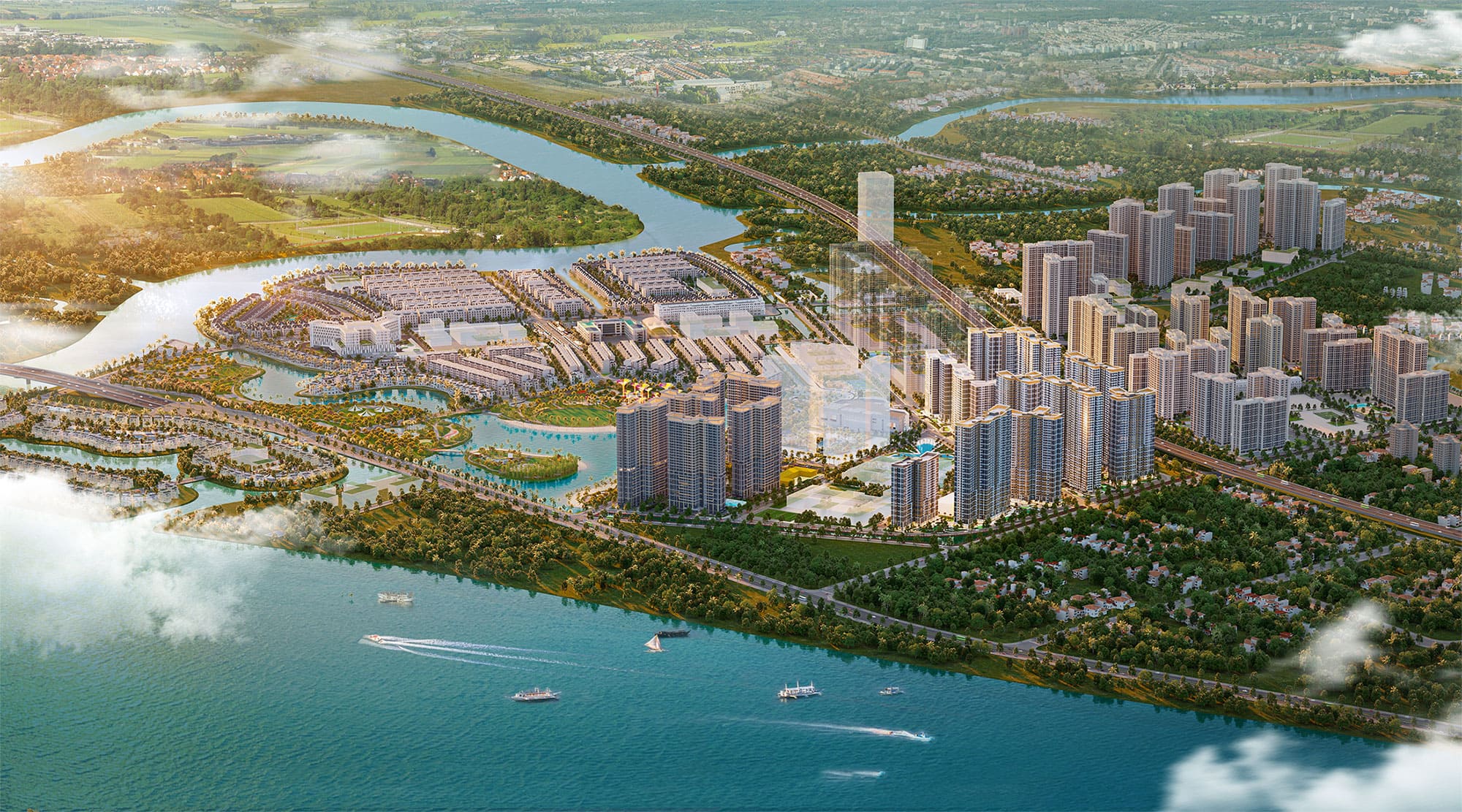
Comparing Vinhomes Saigon Park and Vinhomes Grand Park: Which is the Better Investment Opportunity?
When investors ask “Saigon Park or Grand Park?”, the underlying question often is: should I invest in future potential or in an established, proven asset? Vinhomes Saigon Park — a 1,080-hectare mega-urban development in Hoc Mon, preparing for launch in Q3/2026 — and Vinhomes Grand Park — 272 hectares in Thu Duc, operational since 2021-2022 with an established community — are two projects at entirely different development stages. Comparing them on the basis of “which is better” misses the point.
This article does not declare a winner. Saigon Luxury analyzes both projects using the framework that professional investors employ: position within the investment cycle, risk profile, and capital requirements for each segment. From this analysis, we determine — for each investor profile — which project is the better fit, or whether a diversified approach holding both properties makes strategic sense.
Overview: Two Projects, Two Positions in the Urban Cycle
Before comparing individual criteria, the complete picture must be viewed through a single lens: development stage. Grand Park in 2026 represents the tail end of the initial growth phase — the resident community is established, prices already reflect most near-term potential, and rental income can be projected with reasonable accuracy. Saigon Park in 2026 is at the beginning of its development cycle — regulatory framework complete, the first phase preparing for launch, with all appreciation potential still ahead.
| Criteria | Vinhomes Saigon Park | Vinhomes Grand Park |
|---|---|---|
| Location | Hoc Mon, Northwest Ho Chi Minh City | Thu Duc (District 9), East Ho Chi Minh City |
| Scale | ~1,080 hectares | ~272 hectares |
| Stage | Pre-launch, launching Q3/2026 | Operational 2021-2022, community established |
| Projected Population | 135,000 residents + 60,000 students | Residents already living |
| Distinctive Positioning | University city VIUT, 200-hectare golf course | Young, family-oriented, proximate to Metro Line 1 |
| Infrastructure Connectivity | Ring Road 3 (operational), Highway 22 expansion, Metro 2 (not yet commenced) | Metro Line 1, Ring Road 3, East-North Ho Chi Minh City corridors |
| Investment Capital | ~59,000 billion VND | Majority already completed |
| Appreciation Potential | High, long-term horizon of 7-10 years | Stable, yield-focused approach |
The table above illustrates the fundamental distinction: Saigon Park is nearly 4 times larger than Grand Park, but at a completely different stage in its development lifecycle. This distinction is not simply a pro or con — rather, it is critical information that determines which investor profile should prioritize which project.
Comparison 1: Location and Infrastructure Connectivity
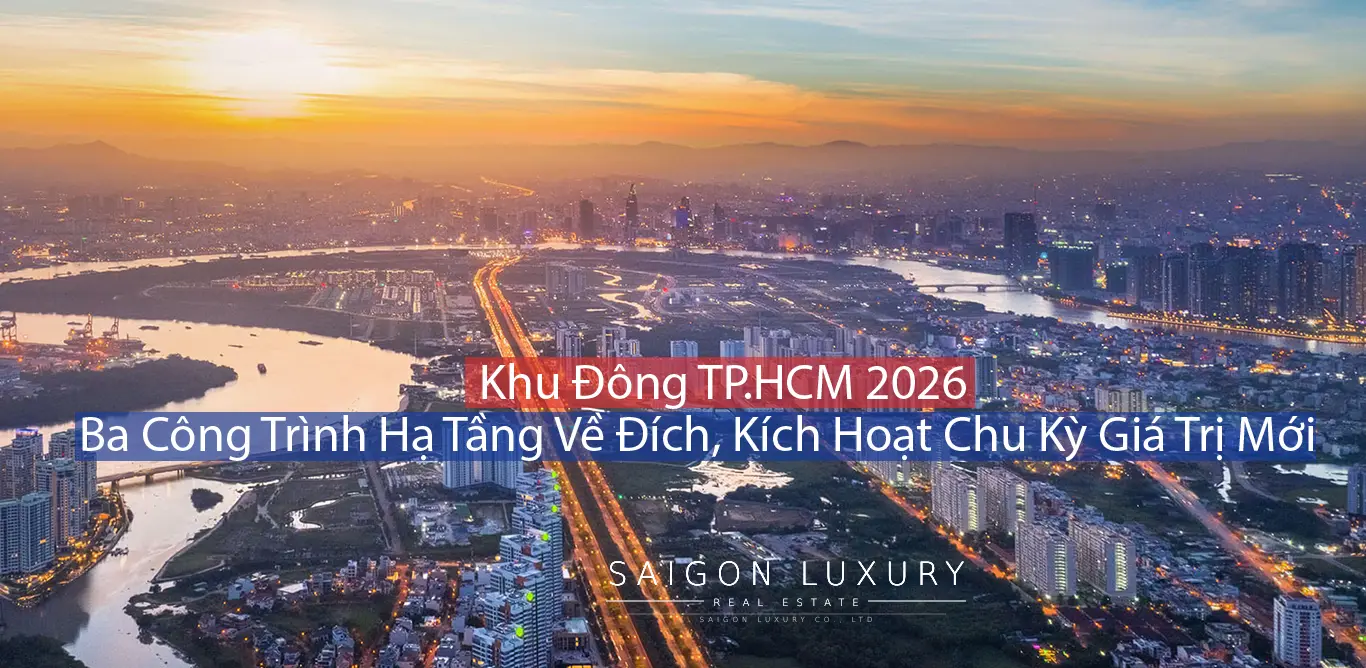
The Eastern Zone of Ho Chi Minh City — where Grand Park is located — has benefited from a decade of coordinated infrastructure investment. Metro Line 1 (Ben Thanh – Suoi Tien) directly connects the Thu Duc area with the city center, reducing travel time from 40–50 minutes by road to less than 30 minutes by subway. Ring Road 3, the Long Thanh expressway, and major national highways have created a comprehensive transportation network serving the East Zone. Consequently, real estate values within Grand Park’s radius already reflect most of this infrastructure value.
The Northwest Zone — where Saigon Park is located — remains in the pre-infrastructure completion phase. This represents the most significant differentiator between the two projects. Ring Road 3 is scheduled for completion in 2025–2026, and Highway 22 is being expanded to 60 meters with 10 lanes (total investment: 10,424 billion VND) — infrastructure that will form the transportation backbone for the entire region. However, Metro Line 2 (Ben Thanh – Tham Luong – Hoc Mon) — which could reduce travel time to District 1 to 15–40 minutes — had not received an official groundbreaking date as of May 2026.
Analytical Commentary
From an investment perspective, “existing” infrastructure at Grand Park means that its value is already reflected in current pricing. “Forthcoming” infrastructure at Saigon Park means that pricing has not yet fully captured that value — creating growth potential. However, “forthcoming” infrastructure can also be delayed relative to original schedules, and investors should factor this scenario into their financial projections.
Comparison 2: Products and Market Segments
Both projects offer diverse product portfolios — villas, townhouses, shophouses, and apartments — but their differentiation lies in positioning and supplementary demand sources.
Grand Park: Urban Ecosystem for Young Families
Grand Park is designed around an amenities infrastructure tailored to young families: Vinschool education, Vinmec hospital, VinCom shopping centers, water parks, and expansive urban parks. The “young and vibrant” positioning is reflected in the actual customer profile: primarily young owner-occupier families and investors seeking rental returns from professionals in the Thu Duc district — home to numerous universities (RMIT, UEF, Fulbright), industrial parks, and technology companies.
Saigon Park: Urban Ecosystem for Universities and Cross-Border Trade
Saigon Park employs fundamentally different positioning: the VIUT international university township serves as the core anchor, complemented by 552 standalone villas overlooking a 200-hectare golf course and 2,491 townhouses. It offers supplementary demand sources absent from Grand Park: 60,000 VIUT students create a stable, long-term apartment rental market, and cross-border trade flows via Highway 22 generate commercial shophouse demand. However, this demand will materialize after 2030, unlike Grand Park’s existing demand.
Product Comparison Considerations
One critical distinction: Grand Park has an established market price validated through years of actual transactions, enabling investors to price relatively accurately. Saigon Park has no official pricing as of May 2026 — the price matrix will only become clear following the Q3 2026 launch of subzone C1-A. This makes current absolute price comparisons between the two projects insufficiently substantiated.
Comparison 3: Investment Potential — Capital Appreciation or Rental Yield?
This aspect captures most investors’ attention and warrants the most rigorous analysis.
Grand Park: Yield-Driven Current Phase
Grand Park has already passed through the strongest price appreciation phase in a Vinhomes megacity’s lifecycle — the period from launch until community formation achieves sufficient appeal. From approximately 2021-2022 to present, price growth has stabilized to reflect operational reality rather than speculation. This does not mean Grand Park lacks potential — it means Grand Park’s current potential tilts more heavily toward rental yield than capital appreciation.
One critical characteristic: secondary market liquidity at Grand Park has been proven. Investors can exit within reasonable timeframes when needed — a value proposition Saigon Park does not yet possess.
Saigon Park: Long-Term Capital Appreciation Play
Saigon Park is at the beginning of a cycle that Grand Park experienced during 2018-2022. If structural conditions are met — infrastructure completion, VIUT operational launch, community formation — the capital appreciation potential over 7-10 years will considerably exceed Grand Park’s current trajectory. Based on lessons from the Vinhomes Ocean Park appreciation cycle — a project with similar early structure — the 5-7 year phase post-launch typically delivers the strongest price growth. However, this is a conditional projection, not a guarantee.
Risk-Return Comparison Framework
| Grand Park (2026) | Saigon Park (2026-2030+) | |
|---|---|---|
| Primary expectation | Stable rental yield | Long-term capital appreciation |
| Risk level | Low — proven track record | Higher — unproven |
| Price appreciation potential | Limited in the short term | Substantial, but over a 7-10 year horizon |
| Secondary liquidity | Strong — established market | Not yet available — will develop gradually |
| Earliest cash flow | Upon signing rental agreement | After handover, 2030-2031 |
| Best suited for | Investors seeking cash flow; conservative investors | Long-term investors; investors with idle capital |
For detailed financial modeling, see ROI projections by segment through 2030 — comprehensive analysis will be published in Q3/2026.
Risks to Consider in Each Project
No investment is without risk. What differs is the nature and manner of risk management across projects.
Specific Risks of Grand Park (2026)
Risk of limited upside: Grand Park is at the “fairly valued” stage with established potential. Investors purchasing at this phase typically benefit from strong liquidity but narrower capital gains margins compared to those who entered during 2018-2020. This is not a capital loss risk, but rather an opportunity cost risk — capital deployed to Grand Park in 2026 may generate less attractive returns than earlier-cycle investment opportunities.
Operational risk: With an established community in place, management costs, service fees, and Vinhomes’ operational quality become direct factors affecting actual yield. Investors must fully factor these costs into their financial models.
Specific Risks of Saigon Park (2026-2035)
Risk of timeline and absorption: Detailed analysis is provided in analysis of 5 critical factors before investing in Saigon Park. A 9-year timeline represents an extended cycle with multiple variables, and the supply of 2,491 townhouses, 552 villas, and 24 apartment towers presents an absorption challenge requiring close monitoring.
Risk of extended capital costs: For leveraged investors, the 4-5 year construction phase (2026-2030) represents a continuous financial burden with no cash inflows. The ability to sustain capital costs over this extended period is essential, not optional.
Which project should you choose?
The answer is not “pick one or the other” — but rather “understand your investor profile to make an informed decision.” In some cases, holding both at reasonable scale is a well-founded diversification strategy.
| Investor profile | Grand Park better suited | Saigon Park better suited |
|---|---|---|
| Need rental cash flow within 1-2 years | ★★★★★ | ★ |
| Long-term investment 7-10 years, no need for early cash flow | ★★★ | ★★★★★ |
| First-time investor, want to learn Vinhomes market | ★★★★ | ★★ |
| Already own Grand Park, seeking diversification | ★★ | ★★★★ |
| Family living, need premium services immediately | ★★★★★ | ★★ |
| Short-term trading < 2 years | ★★ | ★ |
One notable point in this table: investors already holding Grand Park who wish to diversify into Saigon Park represent the strongest portfolio case. The two projects have low correlation in development stage and geography — meaning risks don’t compound, while upside streams complement each other.
Conclusion
Grand Park in 2026 is a proven asset: strong liquidity, forecastable rental cash flows, and low risk. This holds genuine value — especially for investors prioritizing certainty over high growth potential. Saigon Park in 2026 is an opportunity to invest in an emerging cycle — higher risk, longer wait times, but substantially greater capital appreciation potential if structural conditions are met.
Professional investors don’t ask “which is better?” but rather “which aligns better with my investment objectives, risk appetite, and financial plan?” This is a question that can only be answered through personalized analysis — not from any generic comparison article. Explore additional investment analyses from Saigon Luxury for a more comprehensive perspective on the Ho Chi Minh City real estate market in 2026.
FAQ — Frequently Asked Questions When Comparing Saigon Park and Grand Park
If I already own a unit at Grand Park, should I buy additional units at Saigon Park for portfolio diversification?
From a portfolio construction standpoint, this is a well-founded diversification approach: two projects at different development stages, two distinct geographic locations within Ho Chi Minh City, with low risk correlation. Grand Park provides steady cash flow while Saigon Park serves as a long-term growth asset. Prerequisite: sufficient capital to sustain Saigon Park’s 4-5 year construction phase without relying on cash flow from it.
Does Grand Park still have upside appreciation potential, or has it peaked?
Grand Park still has upside, but the nature of that upside has changed. The phase of breakthrough capital appreciation (2018-2022) has passed. Current upside derives from: rental price growth aligned with regional household income growth, additional amenities development within the project, and potential new infrastructure catalysts (Metro 1 expansion, new interchange on Route 3). A reasonable expectation for investors purchasing Grand Park in 2026 is stable yield-based returns, not double-digit capital gains within three years.
The Eastern zone (Grand Park) versus the Northwest (Saigon Park) — which will be the stronger growth pole over Ho Chi Minh City’s next 10 years?
This question has no simple answer. The Eastern zone already has a solid foundation and will continue developing in depth—through quality upgrades and increased high-end service density. The Northwest is in a growth-expansion phase, with development speed heavily dependent on public investment policies and infrastructure deployment timelines. Ho Chi Minh City’s adjusted master plan through 2040 designates the Northwest as one of several new growth poles—but planning and execution are two different matters.
Saigon Park is nearly 4 times larger than Grand Park — is larger scale always better?
No. Large scale offers two key advantages: sufficient critical mass to establish an independent urban center (not reliant on external ecosystems), and a broader range of product segments for investor selection. However, larger scale also entails significantly longer development timelines, higher absorption risk, and the need for sufficiently dense residential populations to sustain appeal. Scale becomes advantageous only when paired with adequate connectivity infrastructure and clear market positioning—both factors are still developing at Saigon Park.
Which segments at Grand Park still offer strong appreciation potential over the next 2-3 years?
The segments with the greatest potential in the current period at Grand Park typically include: (1) Villas and townhouses in emerging sub-districts where community amenities are progressively developed; (2) Apartments proximate to Metro stations, directly benefiting from Metro 1 operations; (3) Shophouses with primary road frontage, capitalizing on commercial traffic as resident density increases. Please note that Saigon Luxury does not provide investment advisory for Grand Park—this analysis is presented as a general framework only.
For a 7-10 year long-term investment horizon, should I choose Saigon Park or Grand Park?
Over a 7-10 year period, Saigon Park offers superior capital appreciation potential: you are investing at the beginning of a development cycle rather than in its middle stages. Grand Park over the same horizon will primarily generate yield returns through rental income, with modest appreciation gains. Your final decision should account for: whether you require cash flow during those 7-10 years (if yes, Grand Park is more suitable), and whether you can maintain capital position for the first 4-5 years (a prerequisite for Saigon Park to function optimally as a portfolio holding).
Capital allocation decisions between these two major developments depend on your current portfolio structure, financial objectives, and individual risk tolerance. Schedule a 1:1 consultation with a Luxury Advisor to receive personalized analysis—not generic guidance.