English
 Tiếng Việt
On the morning of January 15, 2026, Ho Chi Minh City People’s Committee in collaboration with Sun Group held a groundbreaking ceremony for the Rach Chiec National Sports Complex in Binh Trung ward (former Thu Duc city). With a total investment of more than 145,000 billion VND, this is a large-scale infrastructure project restarted after more than 30 years of planning, expected to complete the urban appearance of the East area and meet the standards of organizing international tournaments.

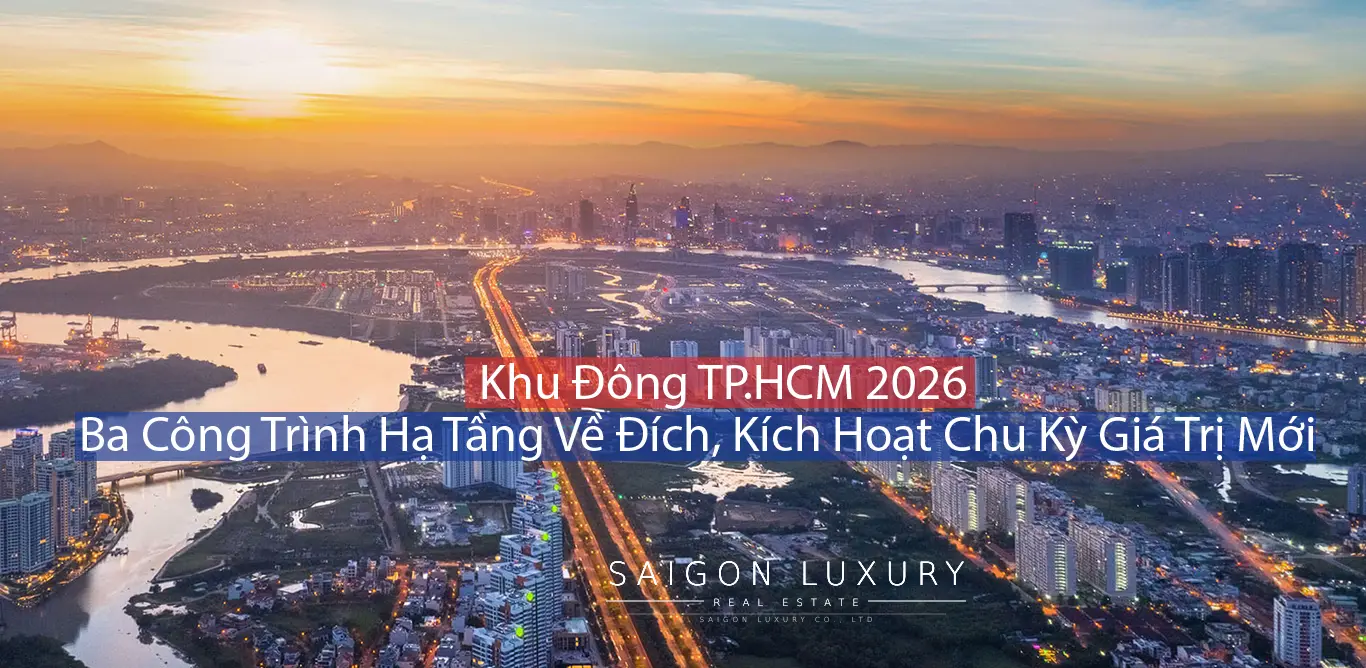
National sports complexRach Chiecis a large-scale sports-culture-entertainment “super complex” project inTP.HCM, is expected to become a center for organizing regional and international sports events. According to published information, the project is implemented atBinh Trung ward(belongThu Duc City), close areaRach Chiec bridgeand important connection axes of the East area, convenient to move to the center and neighboring urban areas. Rach Chiec Sports Complex conveniently connects to Thao Dien,Thu Thiem urban areaas well as the city center (District 1), adjacent to the “New Downtown” urban areaThe Global City.

In terms of scale, Rach Chiec is planned on an area of about186,78 ha, with the total investment mentioned atmore than 145,000 billion VND. The highlight iscentral stadiumwide approx24 ha, capacity approx70,000 seats, aiming at the standards of organizing major tournaments such as SEA Games/ASIAD and international events.
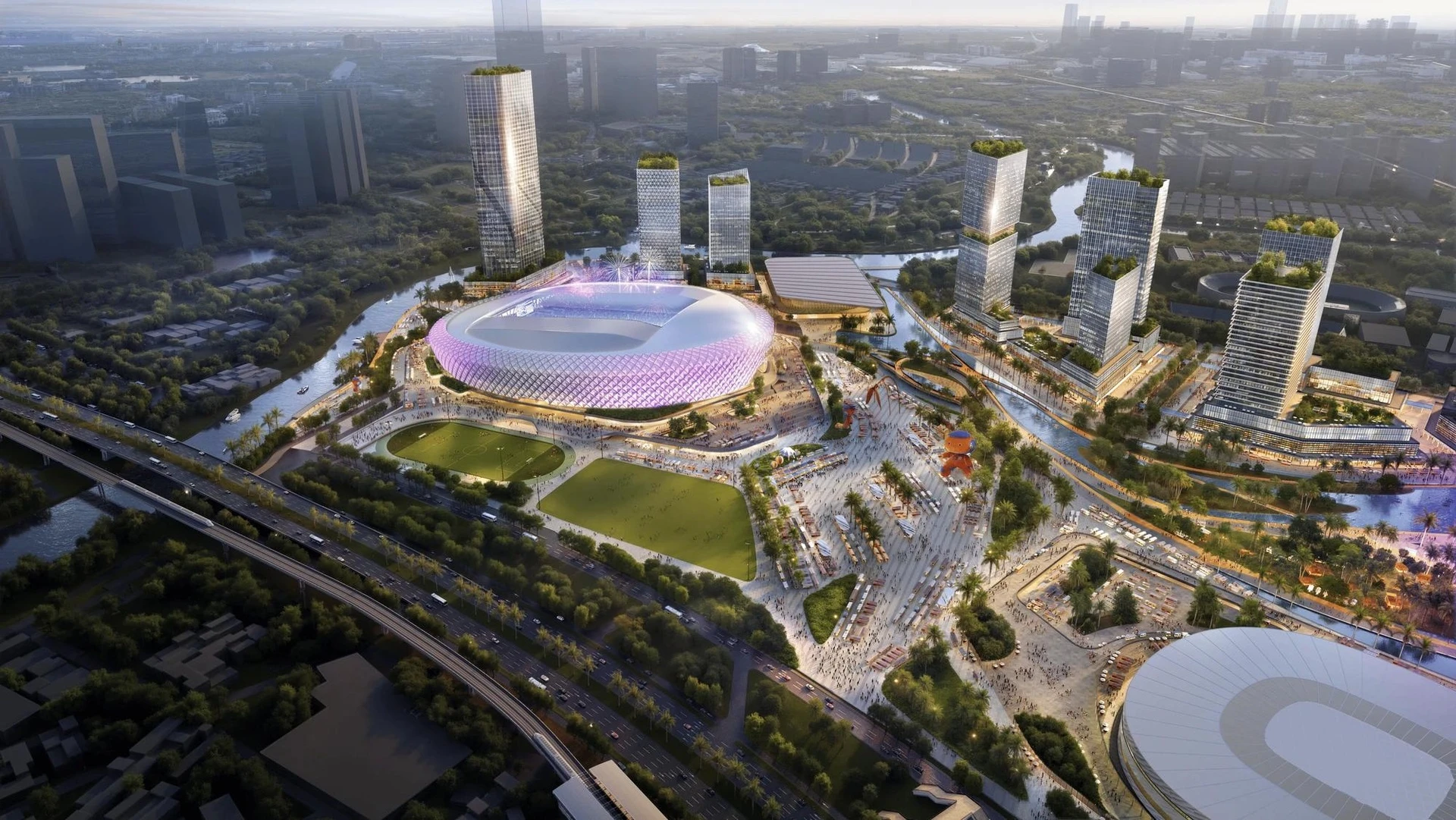
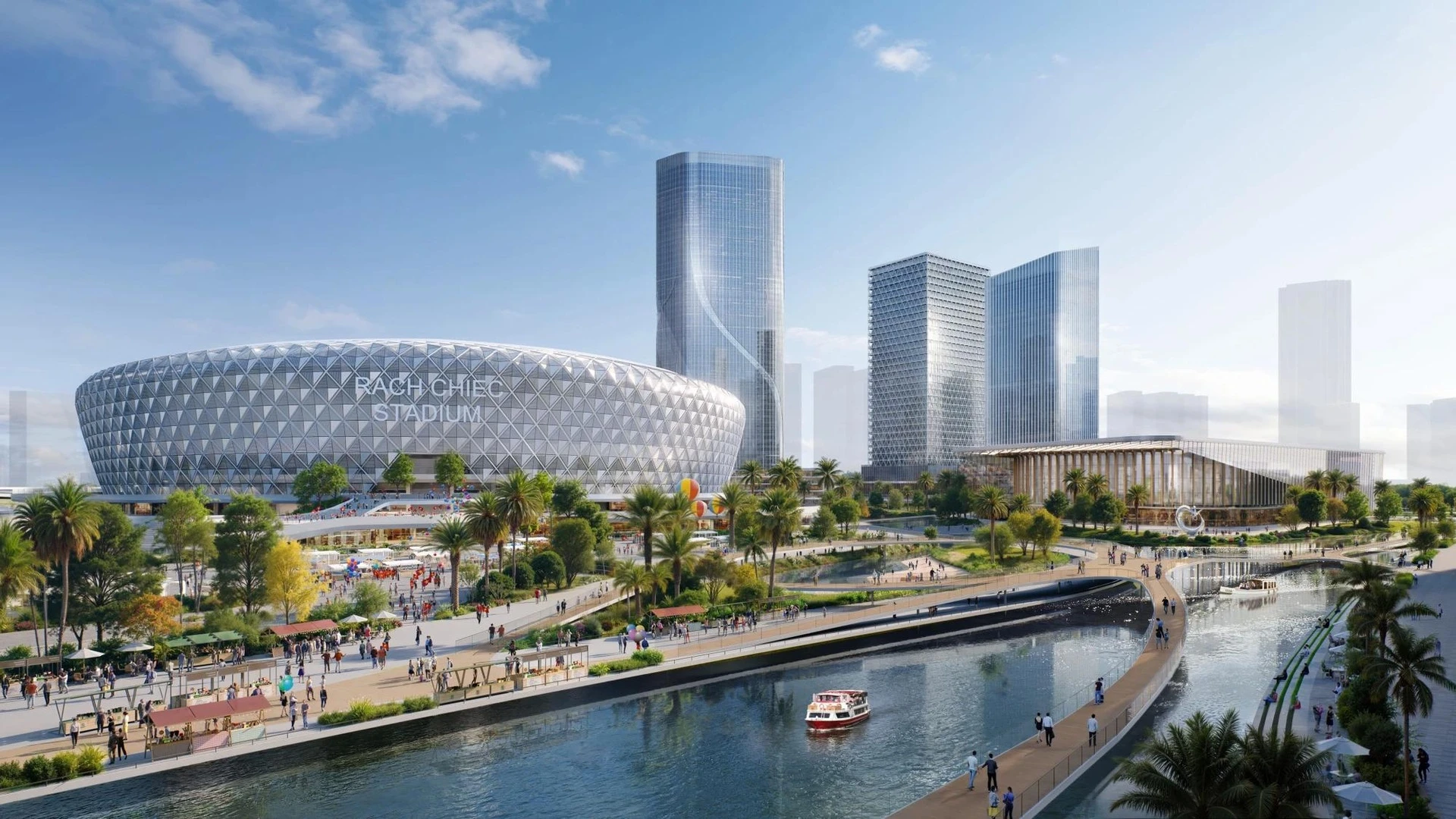
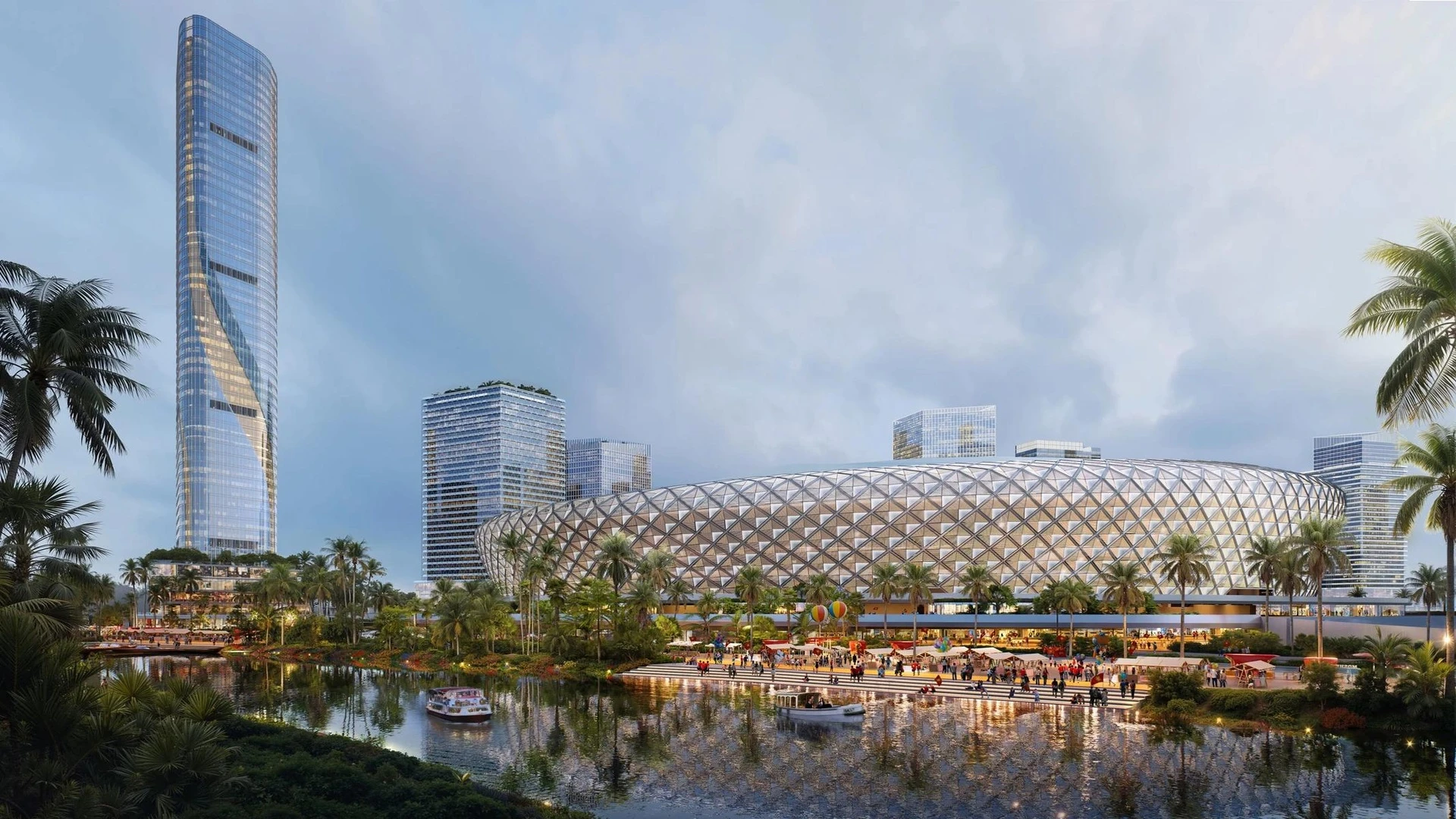
Not only does the stadium have a stadium, the project is also oriented as a multi-functional complex with many items for competition – training – performance; Some published information is also mentionedThe stadium has about 18,000 seatsalong with clusters of specialized sports centers (water sports, tennis, multi-purpose…). This is the foundation to form a new sports and entertainment “destination”, serving both community needs and large-scale events.
In terms of legality and implementation mechanism, the project recorded important progressHo Chi Minh City People’s Council approved the investment policy according to the PPP method, and the 1/500 detailed planning is mentioned in recently published general information. Ceremonygroundbreakingproject takes placeJanuary 15, 2026.
From a development perspective, some information from participating units/international partners shows that the project has a “master plan” with the ambition to enhance the event experience: the stadium is expected to havemobile canopy, soundproofing and air conditioning solutions for seating areas to be able to flexibly switch between sports competitions and concerts/entertainment. This helps Rach Chiec not only become a sports project, but also a modern event infrastructure for Ho Chi Minh City in the long term.
Rach Chiec Sports Area was planned in 1994. Up to now, the transportation infrastructure serving the project has only formed bridges and Lien Phuong roads – direct connections with Vo Nguyen Giap and Mai Chi Tho avenues and Ho Chi Minh City – Long Thanh – Dau Giay highway.
The project is implemented accordinglypublic-private partnership (PPP) form, BT contract(construction – transfer). The investor proposing to implement the project isVung Tau Sun Company Limited(member of Sun Group).
The groundbreaking ceremony was attended by senior leaders including: Secretary of the Party Central Committee, Secretary of Ho Chi Minh City Party Committee Tran Luu Quang; former President Truong Tan Sang; Former Standing Secretary of the Secretariat, General Le Hong Anh; along with many former Party leaders and former leaders of Ho Chi Minh City through different periods.

70,000 SEATER STADIUM – ARCHITECTURAL HIGHLIGHT
The most important item of this complex is the Central Stadiumscale of 24 hectareswith total investment capital for each item estimated at approx35,000 billion VND.
- Capacity: 70,000 seats(largest in the South and close to major stadiums in the world such as Wembley or Bird’s Nest).
- Design:Inspired by imageswater coconut leaves– a typical symbol of the Southern river region.
- Technology:System equipmentThe canopy has the ability to open and close automatically,Integrating soundproofing technology and air conditioning system in each area of the stands, ensuring conditions for holding events in all weather conditions. This stadium is oriented not only to serve sports competitions but also to host large-scale cultural and entertainment events.
GOAL TO SHORT PROGRESS TO 5 YEARS
According to the original plan, the project is expected to take about 8 years. However, at the groundbreaking ceremony, investor representatives and leaders of Ho Chi Minh City said they would focus resources and speed up site clearance work to strive to shorten completion time toabout 5 years.
Restarting the Rach Chiec project is important in the context that Ho Chi Minh City’s existing sports infrastructure (such as Thong Nhat Stadium, Phu Tho area) has been degraded or overloaded. The project is in a series of 4 key projects that were started/ground-breaking at the same time (including Metro No. 2, Can Gio Bridge and Phu My 2 Bridge). When completed, the project is expected to meet the conditions for Vietnam to host major international tournaments such as the SEA Games and ASIAD, while promoting socio-economic development in the eastern region of Ho Chi Minh City.
Rach Chiec Groundbreaking 2026: Any Opportunities for Nearby Real Estate?
JobRach Chiec National Sports Complexgoing into implementation (scale ~ 186.78ha, located between axesMai Chi Tho – Vo Nguyen Giap – Ho Chi Minh City – Long Thanh – Dau Giay expressway) often creates a “two-layer” impact on regional real estate:short term(during construction) andmedium – long term(when operating, forming a destination)
1) What will the impact on regional real estate be like?
Increase “location value” thanks to infrastructure and symbolism
- A sports-event complex with a ~70,000-seat stadium and multi-functional orientation will enhance the “place-making” of the East area: easily attract commercial and service activities (F&B, hotel, retail), increase demand for short-term rentals according to the event season and increase the level of recognition of the area.
- At the same time, this area is located near the backbone connecting to the center through Mai Chi Tho and is attached to important transit points of the city.
Improve rental demand and business capacity
- When there is a tournament/event, the group that benefits most clearly is usuallyApartment for rent, officetel/retail podium, shophousewithin a short travel radius (5–15 minutes), because it can pick up guests, organizing crew, and event participants.
- In the long term, large-scale “extreme amenities” help increase residential appeal to groups of customers who like active lifestyles (sports, entertainment, community).
2) Which projects/areas tend to benefit?
From a market perspective, the impact of Rach Chiec Sports Complex will spread“benefit loops”. A notable point is that projects located close to the An Phu – Nam Rach Chiec area have advantageswelcome the flow of people – services – rental needsalmost immediately as implementation progress and event activity began to clear.
Round 1 – Direct benefits (Rach Chiec | Binh Trung – Nam Rach Chiec – An Phu):
This is the core area that benefits the most thanks to its close distance and quick connectionMai Chi Thoand the ability to form a service ecosystem surrounding sports activities and events. GroupExisting townhouses, villas, and residential landand projects located close to the connecting axis often benefit from an increase in demand for short-term accommodation, dining, entertainment and ancillary services. In this group,The Global City(An Phu) stands out because of its “nearby” location, convenient connection, large urban scale and synchronous utility system – this is a factor that helps the project have the ability to directly benefit both financially and economically.ownership value and commercial exploitation potentialwhen the area increases in activity density. Besides,Lakeview City(Nam Rach Chiec) is also a notable name thanks to its location right in the adjacent beneficiary area. In addition, the productsshophouse/commercial podiumaround the axisNguyen Duy Trinh – Do Xuan Hop – Lien PhuongThere will be room to increase revenue if the weekday and event season services are well exploited.
Round 2 – Double benefits (Metro corridor No. 1 & Mai Chi Tho axis):
Projects along Metro No. 1, especially around the stationThao Dien – An Phu – Rach Chiec, often enjoy “dual” benefits: both convenient to move and easy to meet rental needs for event activities. PrivateThao Dienhas the advantage of a high-class service system, suitable for international/expat groups, so the rental – commercial exploitation margin is often good when the area is vibrant.
Round 3 – Benefit from image and urban value (Thu Thiem core):
When the East region forms another major “event pole”,Thu Thiemwill benefit in terms of urban bustle, new center image value and high-end rental demand. Projects such asSala urban area, Empire City, The Metropole Thu ThiemIt is often mentioned thanks to its adherence to Mai Chi Tho and its high standard of living, suitable for a group of quality tenants.
The formation of Rach Chiec Sports Complex will createExtremely convenient – large-scale eventsfor the Eastern region, thereby promoting itrental needs, commercial services and location valueof neighboring projects (especially along Mai Chi Tho axis and metro stations), but the level of benefits will bedifferentiated according to implementation progress, service operation ability and actual travel distance